
Rain Garden of Ainomachi-guchi, Kyoto Gyoen National Garden
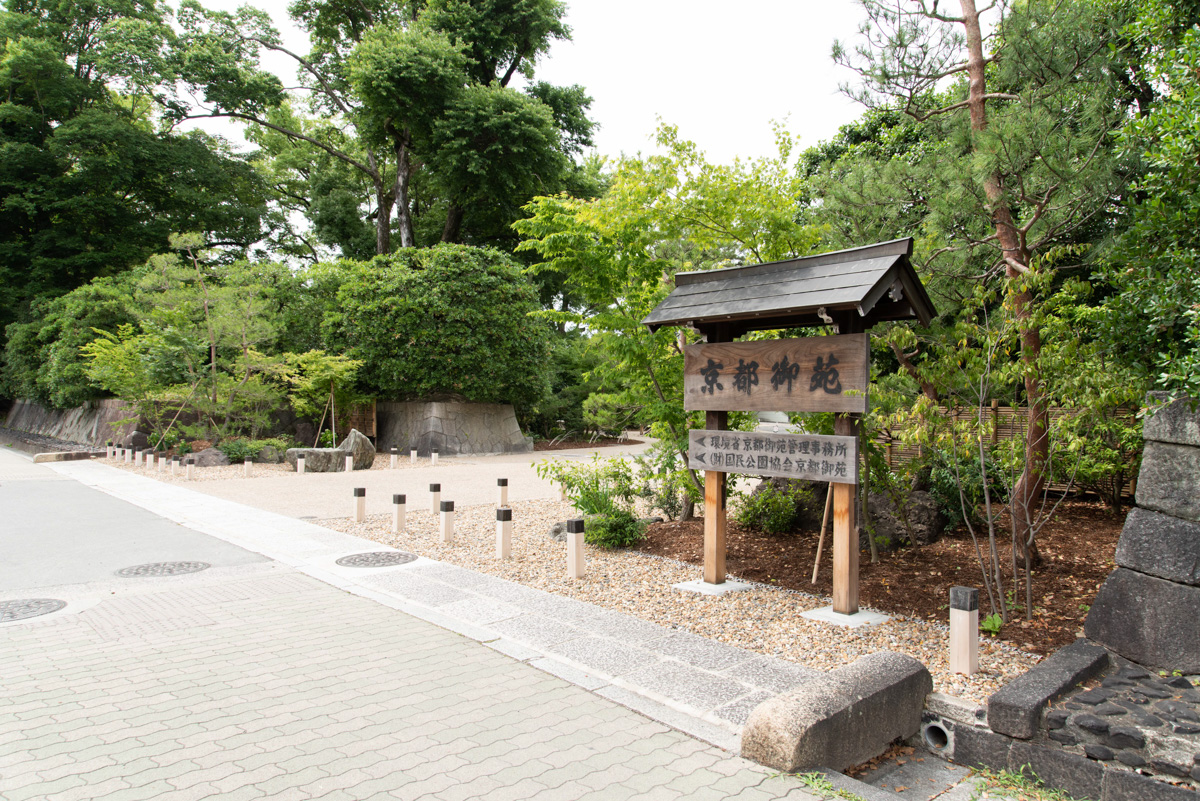
Ueyakato Landscape designed the rain garden at the Kyoto Gyoen National Garden's Ainomachi-guchi entrance, and provided advice for garden expressions such as the choice and placement of its plants and stones.
A rain garden is a garden that collects rainwater in urban spaces that are impermeable to water. It is a form of green infrastructure that prevents flood damage by temporarily storing water and allowing it to gradually infiltrate into the ground.
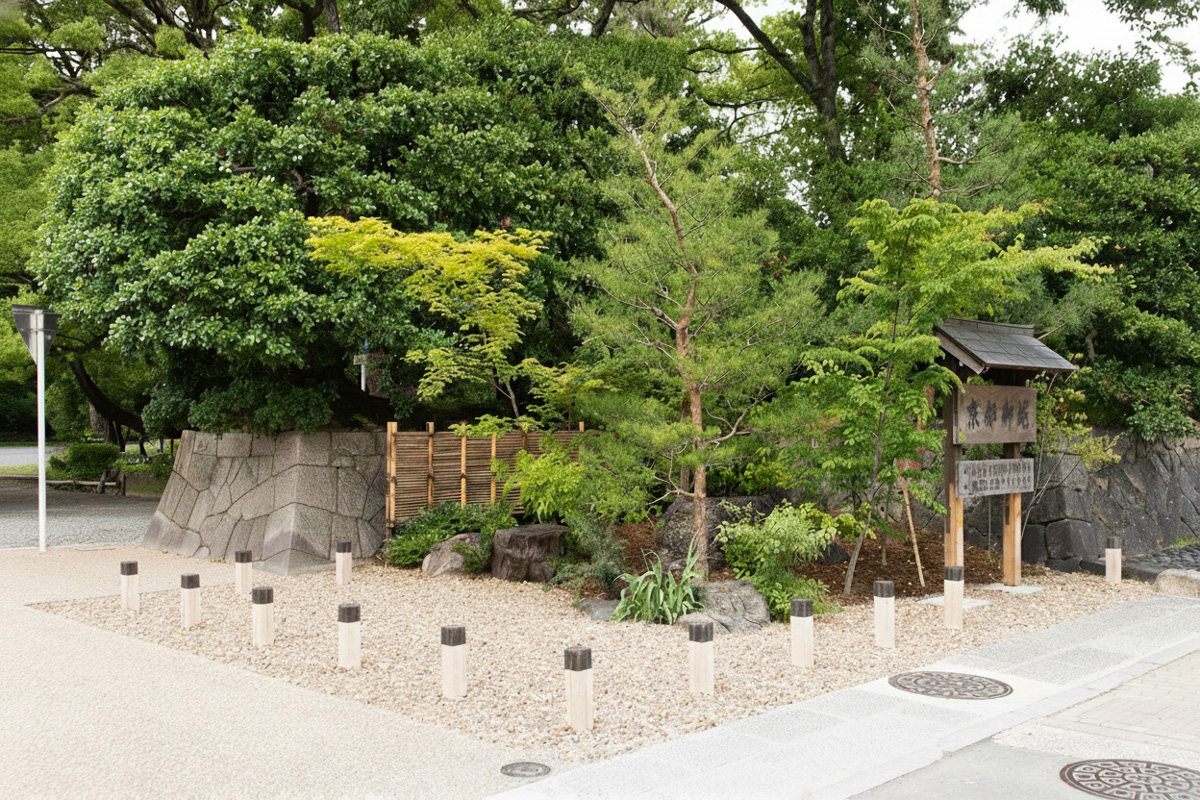
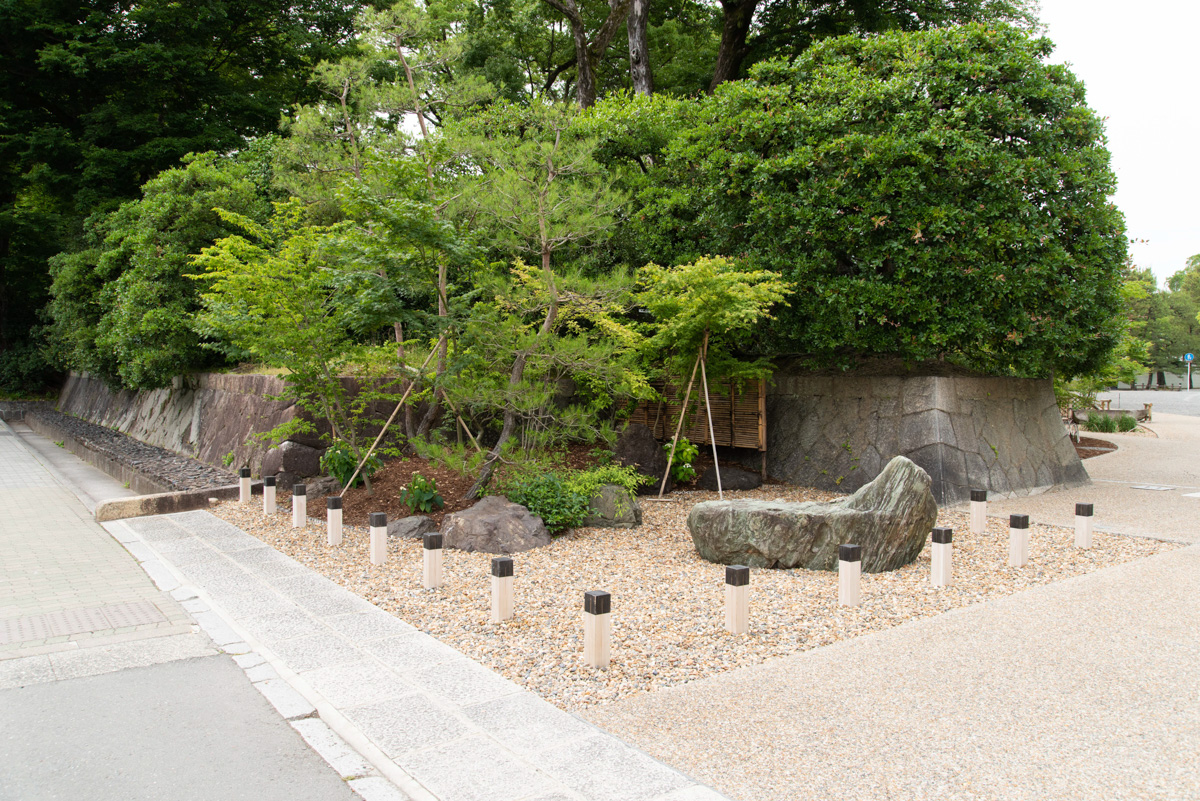
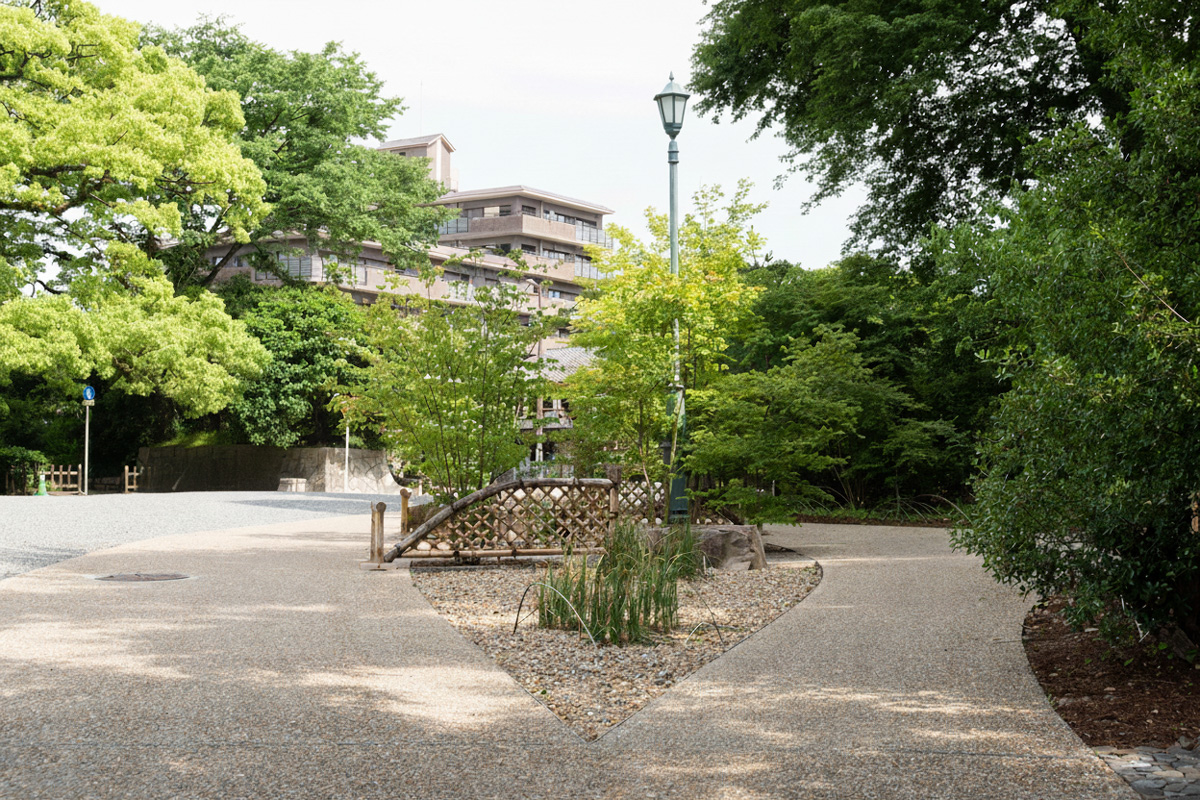
Since long ago, the people of Kyoto have used Ainomachi-guchi as an entrance and exit connecting the southwestern side of the Kyoto Gyoen National Garden to the public street.
In more recent years, there were three issues facing this space.
First, because the topography collects rainwater easily, it was often subject to water damage. Second, overgrown trees provided a hiding place for bicycle abandonment. Third, despite fhe fact the area is used by many different people, its gravel surface was inaccessible to those with disabilities.
Morimoto Yukihiro, professor emeritus of Kyoto University, proposed a landscaping plan that would comprehensively solve these issues while also enhancing the Kyoto Gyoen National Garden's attractiveness by adding new scenery. His proposal was submitted to and accepted by the Ministry of the Environment, which has jurisdiction over Kyoto Gyoen National Garden. This was a pathbreaking first instance of a rain garden being introduced in a national park under the Ministry of the Environment's jurisdiction.
To facilitate temporary rainwater storage and soil infiltration, the rain garden's center is paved with gravel, underneath which water is channeled through underground branch pipes and returned to the garden's planted zone. The garden path uses permeable paving materials that allow rainwater to seep through, while also ensuring barrier-free accessibility.
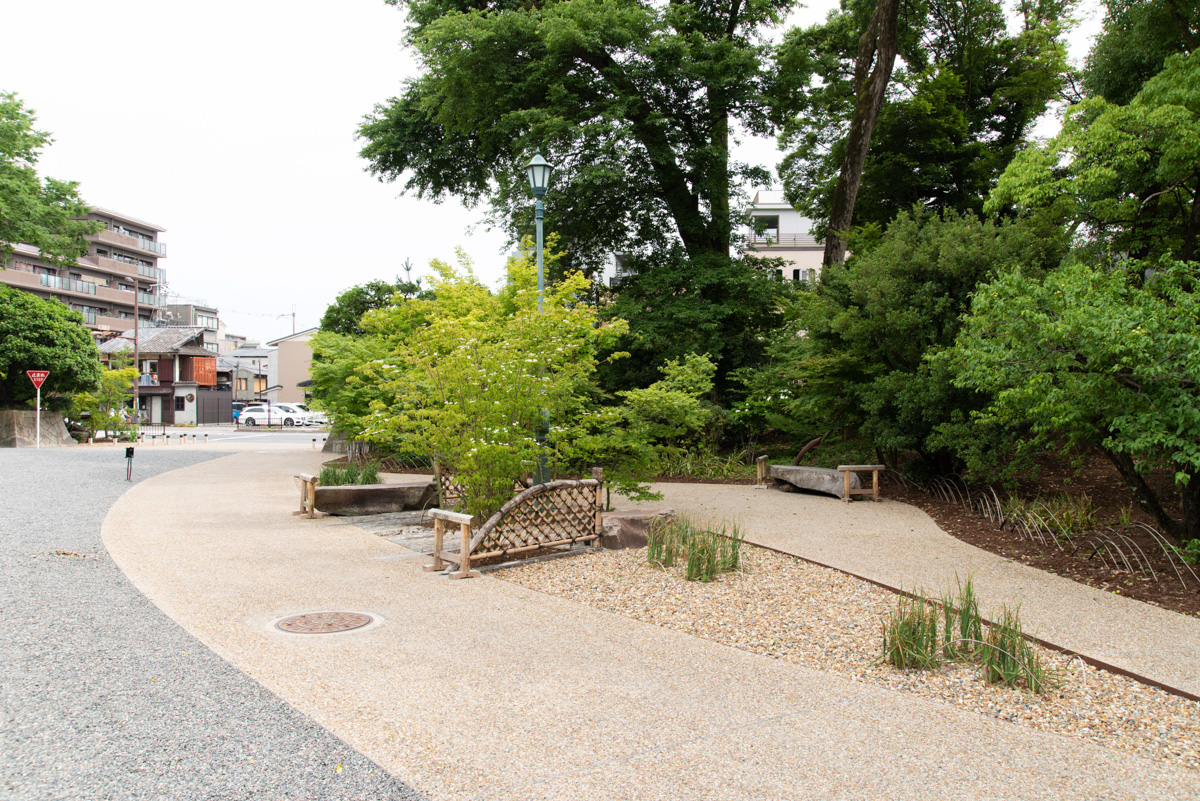
Under Professor Morimoto's leadership, this pathbreaking design bundles together DO pipes and installs many underground drains to rapidly disperse rainwater into the surrounding planting area, thus protecting archaeological remains buried underneath the soil by eliminating the need to dig deep into the ground during construction.
For plants, we used many native Kyoto species like fragrant eupatorium (fuji-bakama), blackberry lily (hiougi), coveralls wild ginger (futaba-aoi), and Japanese beautyberry (Murasaki-shikibu). The result is a new environmental education space where visitors can enjoy flowers blooming throughout the year and experience biodiversity firsthand.
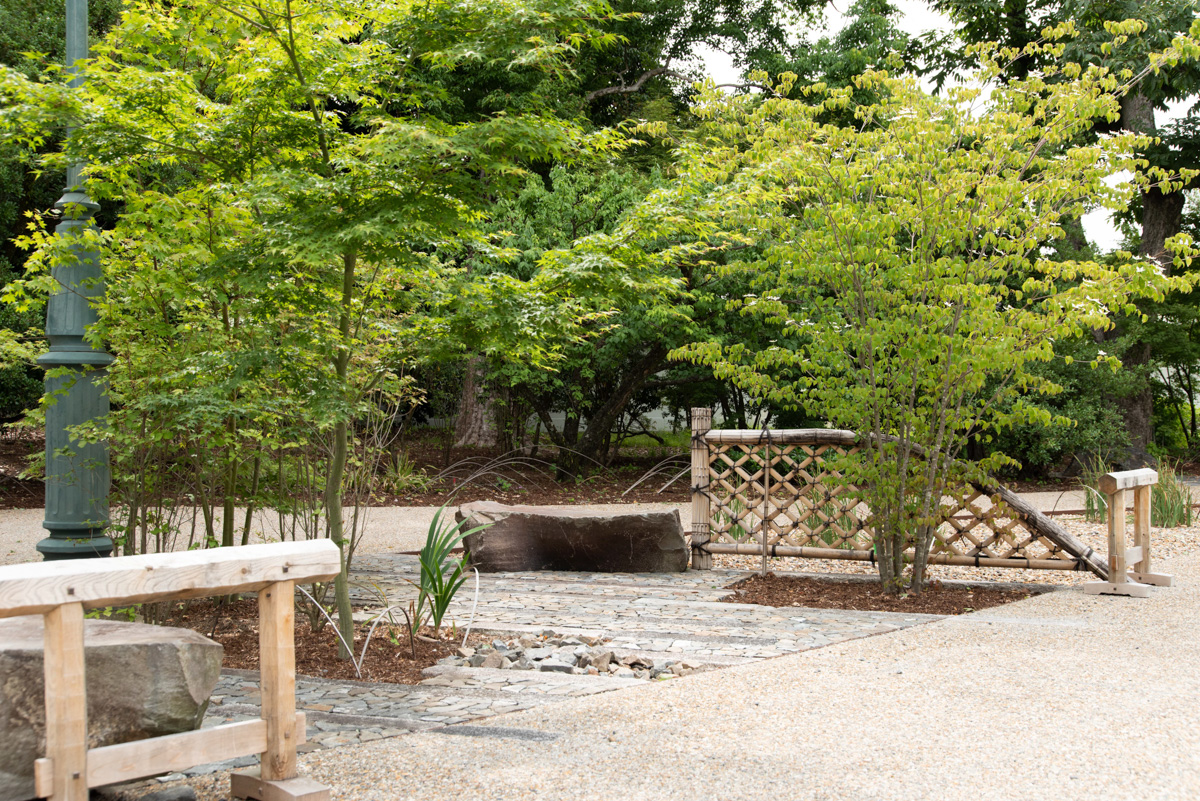
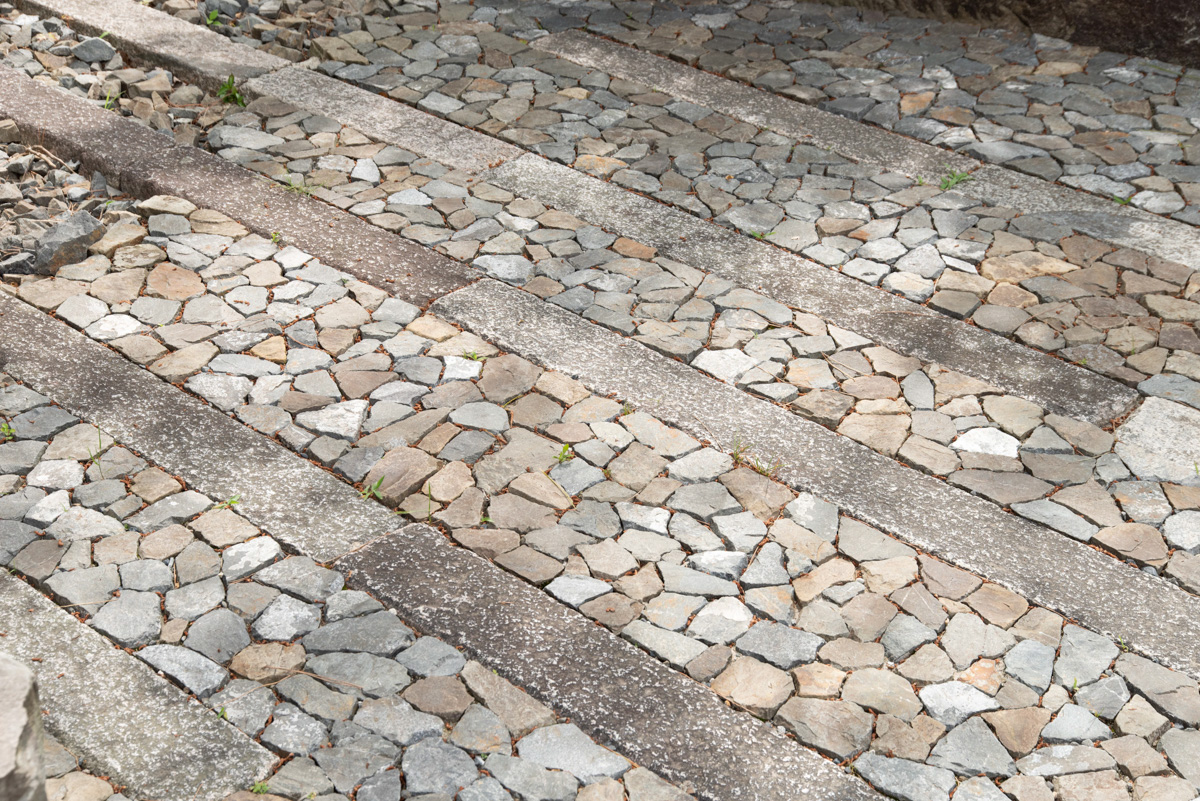
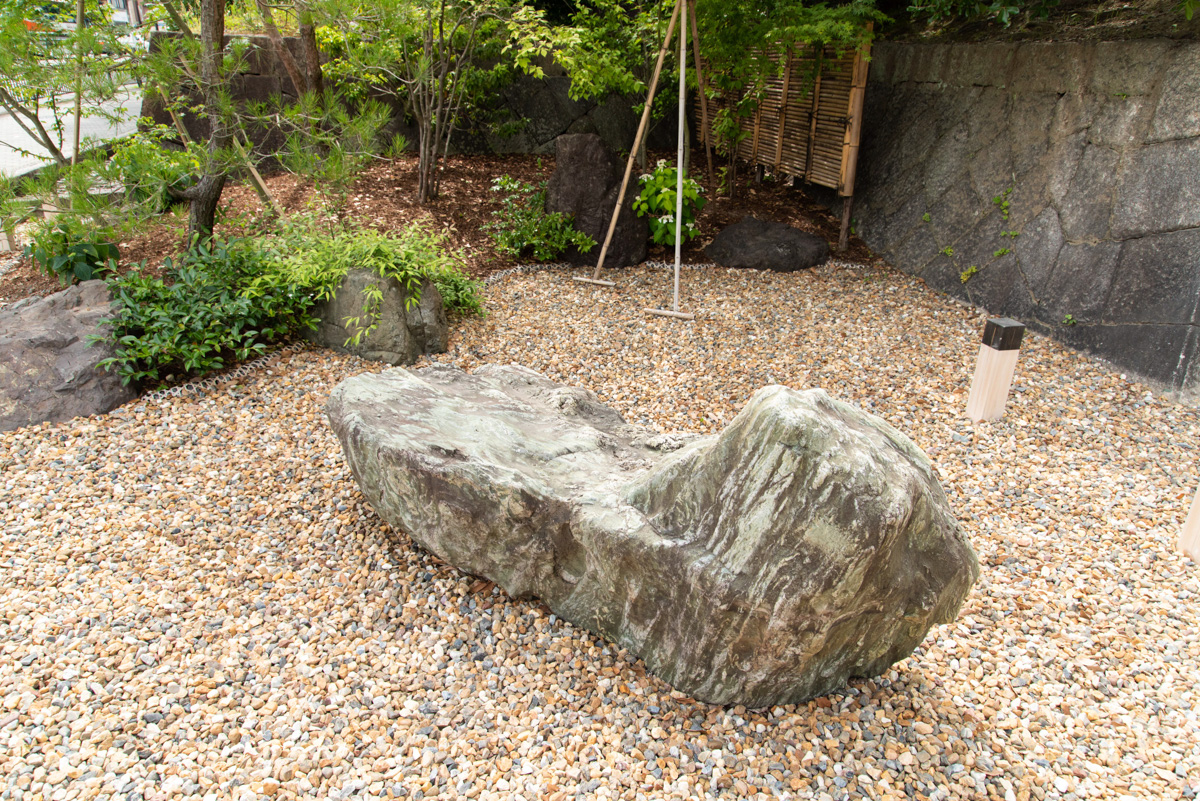
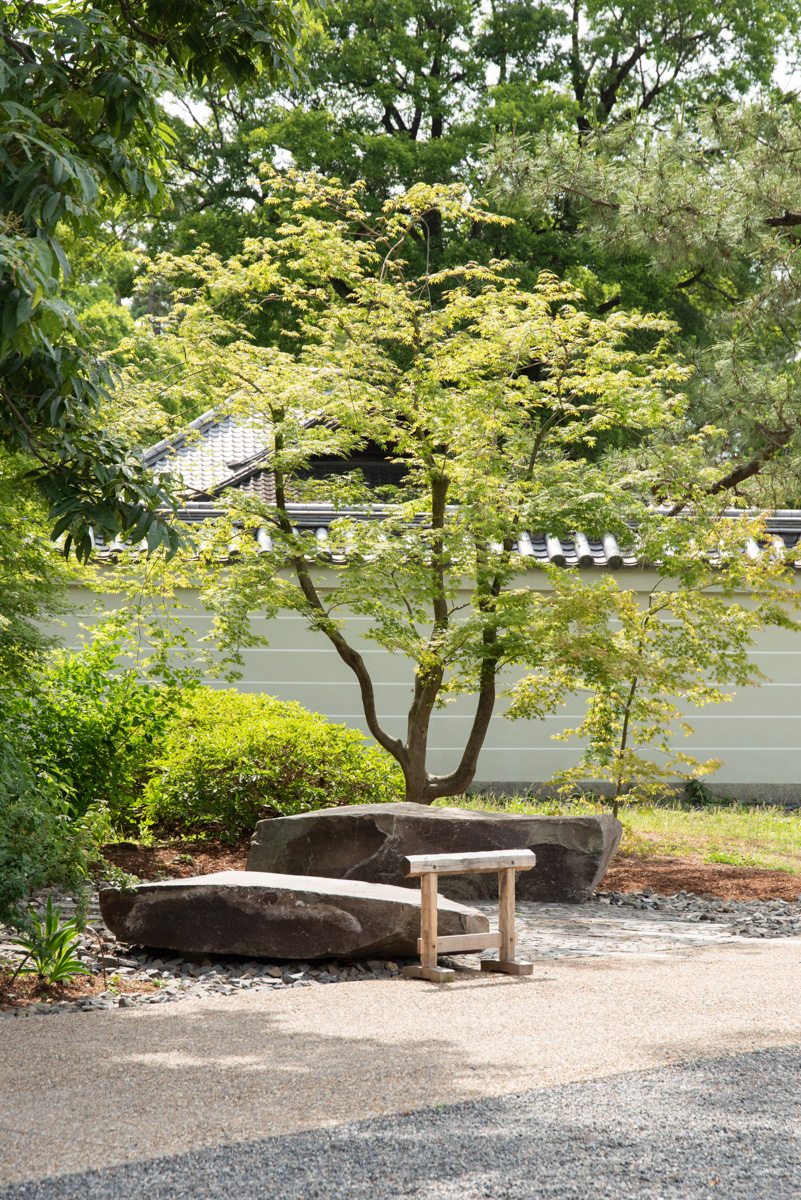
To reduce carbon emissions caused by transportation, stone materials also incorporate many Kyoto-sourced stones. Based on what seemed to match their ambience, these were either used as scattered hailstone pavement (arare-koboshi) or scenic stones in the garden.
As indispensable elements of Kyoto landscaping, we also installed iconic bamboo fences such as a Misu-gaki (bamboo blind) fence and a Koetsu-ji Temple fence. Finally, we replaced the deteriorating wooden bench with a stone bench, and employed garden expressions befitting the Kyoto Gyoen National Garden, resulting in a beautiful and airy space where anyone can find respite.
Another distinctive feature was the creation of a “Management Plan” for those responsible for managing the area that prioritizes the garden's long-term cultivation into the best possible space. For the general public, we have also produced illustrated informational materials highlighting the revitalized area's appeal and providing basic information on rain gardens, green infrastructure, and locally sourced plants.
Rather than creating a large rain garden in a single space, constructing many small ones helps create a more livable environment for wild birds and plants even in urban spaces. Fostering collaboration and joint activities among a diverse range of groups also leads to the formation of a more robust ecological network. Ueyakato Landscape will continue employing the traditional gardening skills we have nurtured over the course of our company's history in the interests of urban environmental improvement.
Location: Kyoto Gyoen National Garden, Ainomachi-guchi
Design: Ministry of the Environment, Kyoto Gyoen National Garden Management Office/Ueyakato Landscape Co., Ltd.
Design direction: Morimoto Yukihiro
Construction: Ibaraki Shunso-en, Co., Ltd.
Construction year: 2021
Area: 3,071㎡
- Location:
- Kamigyo Ward, Kyoto City
- Accessibility:
- Open to the public
- Garden creation period:
- 2021