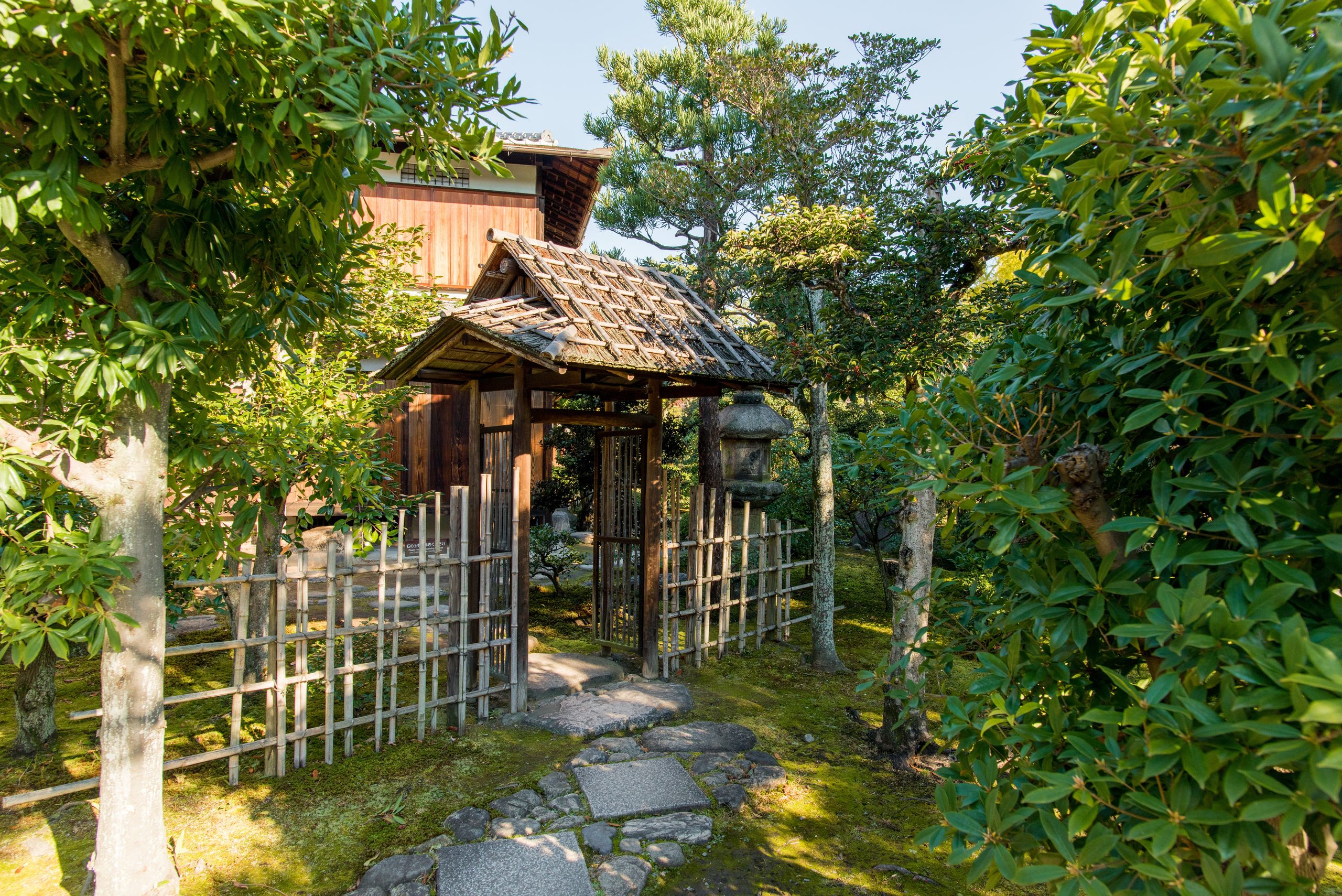
The Bamboo Fence (takegaki)
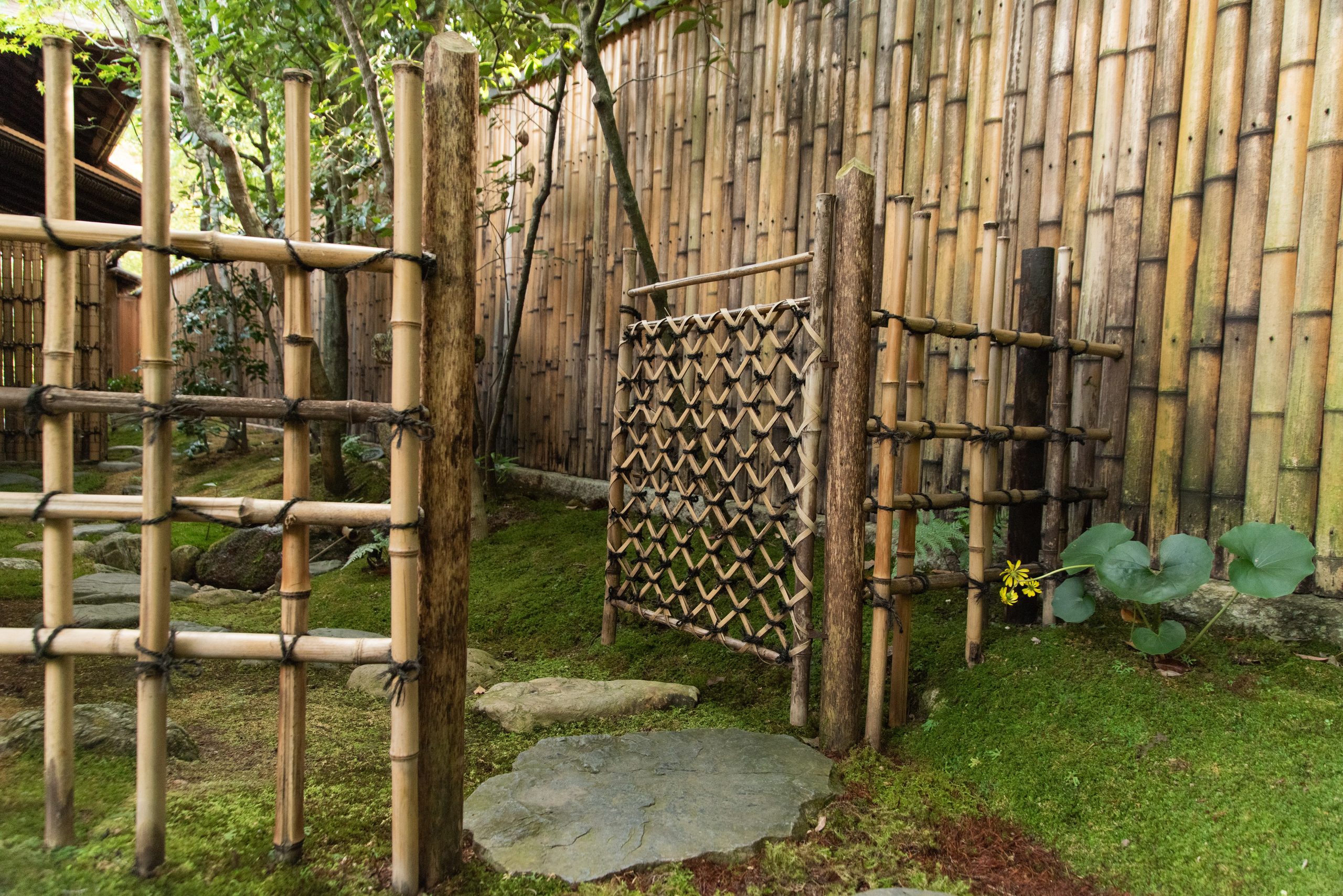
In the world of design, it is often natural materials that integrate beauty with utility best.
Such, for example, is the case with bamboo. As a building material, bamboo is hardly unique to Japan. It grows naturally across Asia, and it not only also grows up fast, but does so in round, pole-shaped stalks. Little wonder, then, that bamboo fences are found throughout Chinese and Southeast Asia. Yet bamboo fences have a way of calling to mind Japanese garden design in a way that few other motifs can. What is it exactly that makes them so special to our perception of Japanese garden beauty?
Although Japanese gardens come in all shapes and sizes, it is also true that they are often created in small and narrow places. This is a natural response to Japan’s mountainous environment, but also a reaction to Japanese urbanization, especially after its merchant class, through a widening sphere of foreign trade, rose to a new level of economic prominence during the sixteenth century. To pursue their vision of the tea garden as an urban oasis—or a “mountain abode in the city” (shichū no sankyo)—these merchants needed to evoke the feeling of space and movement within the limits of their property. With its unique usability, bamboo was a natural choice for them to use as a partition. Alongside stepping stones, stone lanterns, basin arrangements and other tea garden elements, can be used to achieve a vast range of visual effects. They can be used to obstruct our eyesight, frame garden scenery through a lattice screen, or direct our attention downwards to the scenery around our feet. Yet all coordinate a garden’s feeling of space with the movements of its guests. Above all, the bamboo fence establishes the transition between “inner” and “outer” space in tea gardens that, by introducing physical separation, fosters a higher sense of spiritual elevation.
To split a space, however, is potentially to spoil its natural ambience. How do bamboo fences manage not only to escape this fate, but even to draw out a garden’s beauty further? To answer, try visiting any one of Kyoto’s many Buddhist temples. There you will likely find a thicket of lush bamboo growing in its vicinity, providing the temple with a convenient building material. Using bamboo taken from here creates a natural feeling of continuity. No surprise, then, that Japan’s signature styles of bamboo fence are so often named after its temples. Japanese gardens translate this natural continuity into an element of landscape design.
Bamboo is thus more than a design object; it is a living material. With its brief youth of vigorous green that decays into a faded brown, the bamboo fence seems to convey the very evanescence of Japanese garden beauty. Each bamboo stalk is at once straight as a pole, and yet has irregular curves and twists that are unique to it alone. Thus, while every style of bamboo fence has its own rules of construction, to use bamboo expressively, one must first know it as a living thing. The same may be said of the Japanese garden itself.