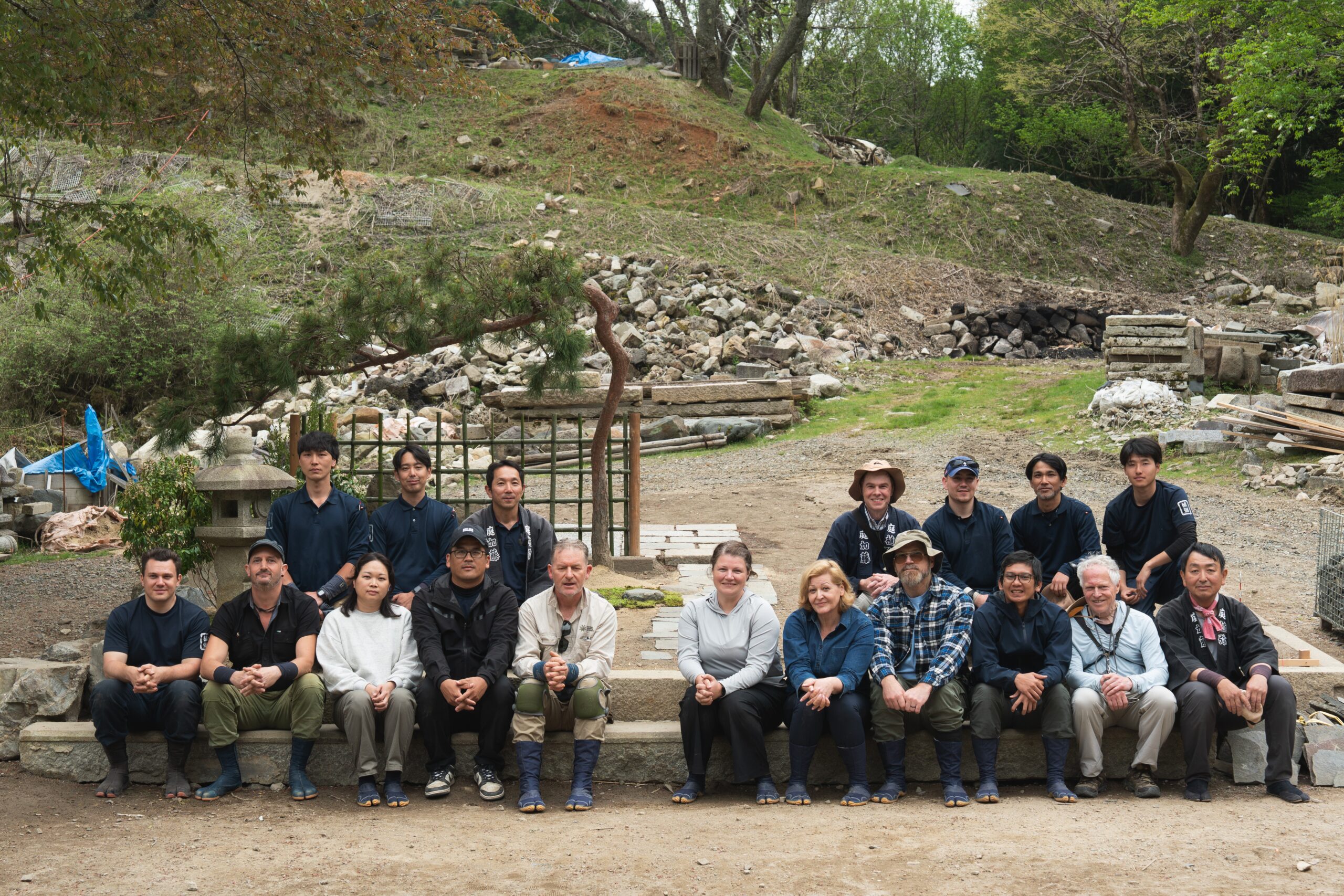
Japanese Garden Training Program 2026
- Theme:
- The Kyoto Garden as Seen Through Temple Scenery, a Permanent Tradition of Innovative Freedom
- Period:
- April 13-17, 2026
- Instructors:
- Tomoki Kato, Sueo Kato, Tomohiko Muto, Shigeyoshi Takemura, Mitsuru Yamaguchi
About our program
Ueyakato Landscape is dedicated not only to fostering Japanese garden scenery that will last for generations. We are also committed to sharing the spirit and skills of our mission with people from diverse backgrounds beyond Japan. For our gardeners, these endeavors offer the new challenge of putting the knowledge they have gained in the field into language that can be shared with the world.
Our Japanese Garden Training Program for non-Japanese speaking participants is one such effort. For the past three years, we have invited students from around the world to participate in a five-day course in which our gardeners share what they have learned over many years of observing, managing, and creating Japanese gardens in Kyoto. So far, we have participants from North America, Australia, the United Kingdom, Austria, Indonesia, and Taiwan.
Building on the first two years of this new course, this year we introduced a two-tier program integrating first-time participants and repeat participants into a comprehensive seminar. Five first-time students participated in our regular five-day course covering garden management at Japanese gardens we care for, observation of some of Kyoto’s most renowned gardens, and a garden creation project held at our worksite on the outskirts of Kyoto. Additionally, three second-time participants joined a three-day workshop that focused on learning a classic technique of Japanese garden creation. This year, we chose to focus on nobedan pavement for this workshop. For the final two days of the course, both teams worked side by side to create new Japanese garden scenery together. Our aim was to create a space that used a nobedan pavement to tap into the profound versatility seen in the garden scenery of Kyoto’s historic temples.
Program Schedule
Day 1 First-time participants: Lecture by Ueyakato Landscape’s company president, welcome lunch, garden excursions
Day 2 First-time participants: Garden management training
Day 3 First-time participants: Garden excursions Second-time participants: Nobedan workshop
Day 4 First-time & Second-time participants: Garden creation
Day 5 First-time & Second-time participants: Garden creation, celebratory dinner
Day 1 Introductory Lecture and Observation of Gardens Managed by Ueyakato Landscape
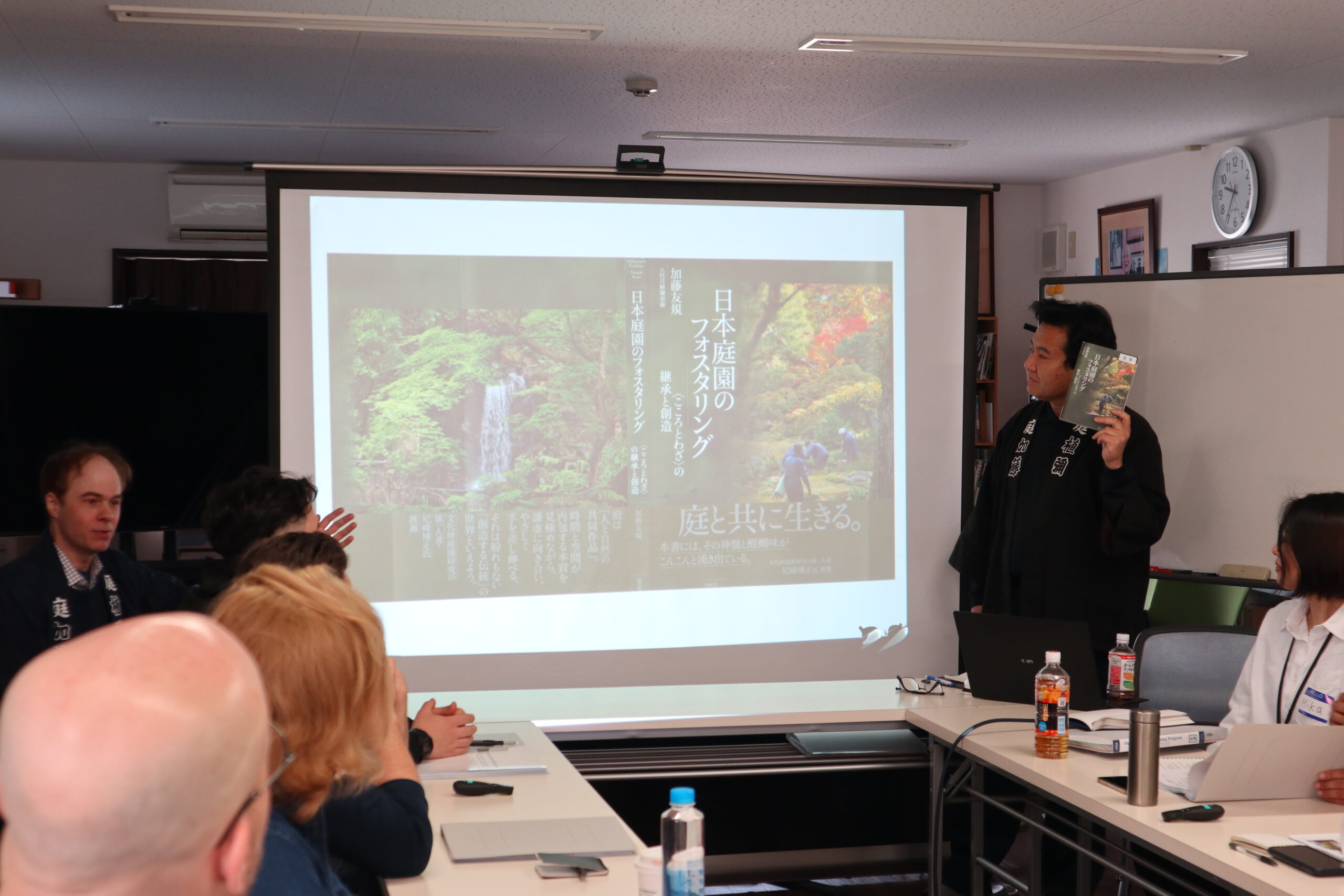
Introductory lecture by Ueyakato Landscape president, Tomoki Kato
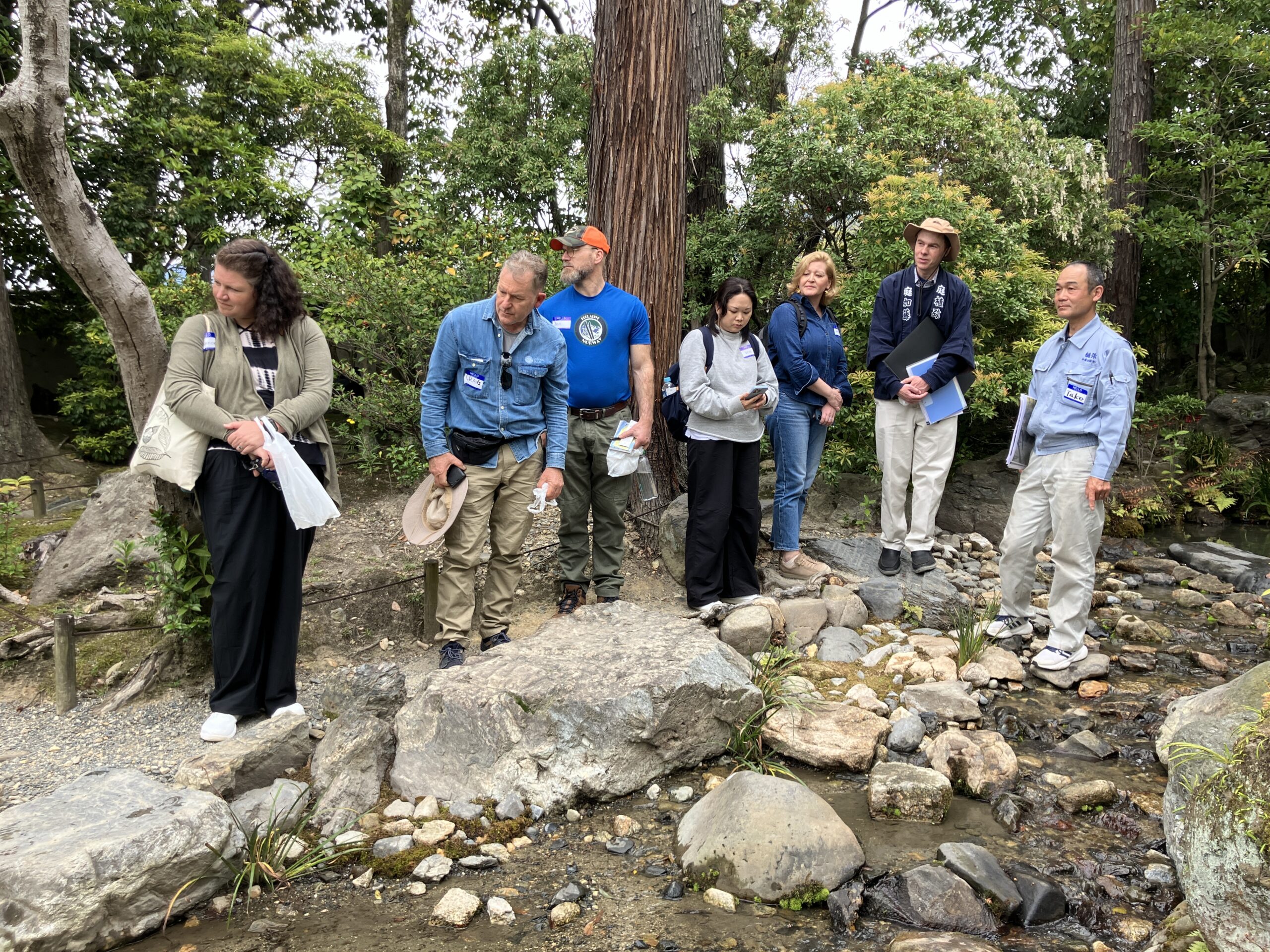
Studying Japanese garden composition at Murin-an
In each historical period, Japanese gardens have reflected the lifestyles of the time and changed alongside them. On the first morning of our program, we held an introductory lecture to set the pace and tone for the next five days of learning. After a welcome lunch held at our company, we spent the afternoon visiting the gardens of Murin-an and Tairyū-sansō, two classic modern Japanese gardens under Ueyakato Landscape in the Nanzen-ji Temple district.
Day 2 Study of Nanzen-ji Temple and Garden Management Training at Dainei-ken Villa
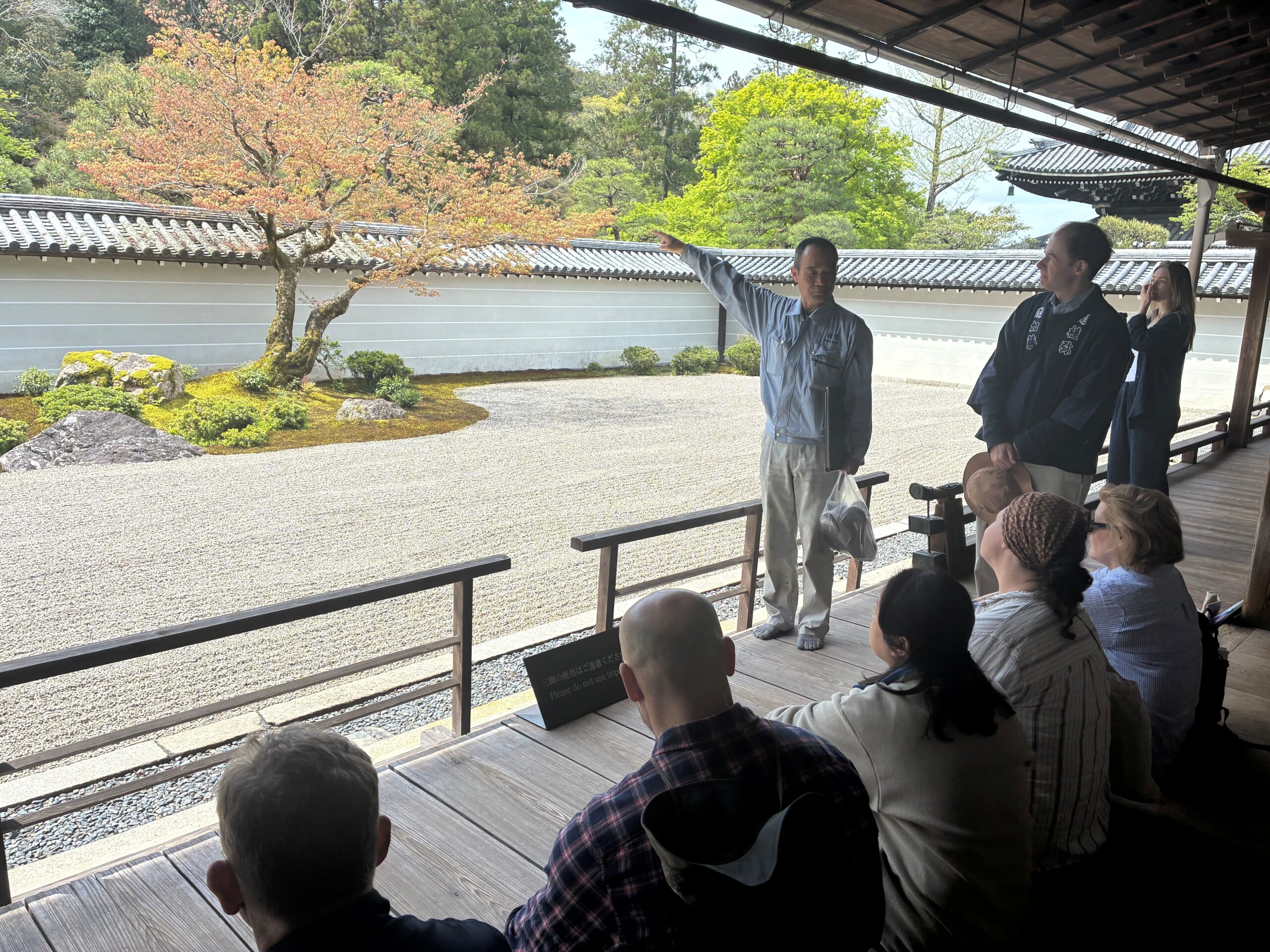
Learning about Nanzen-ji Temple’s Hojo Garden
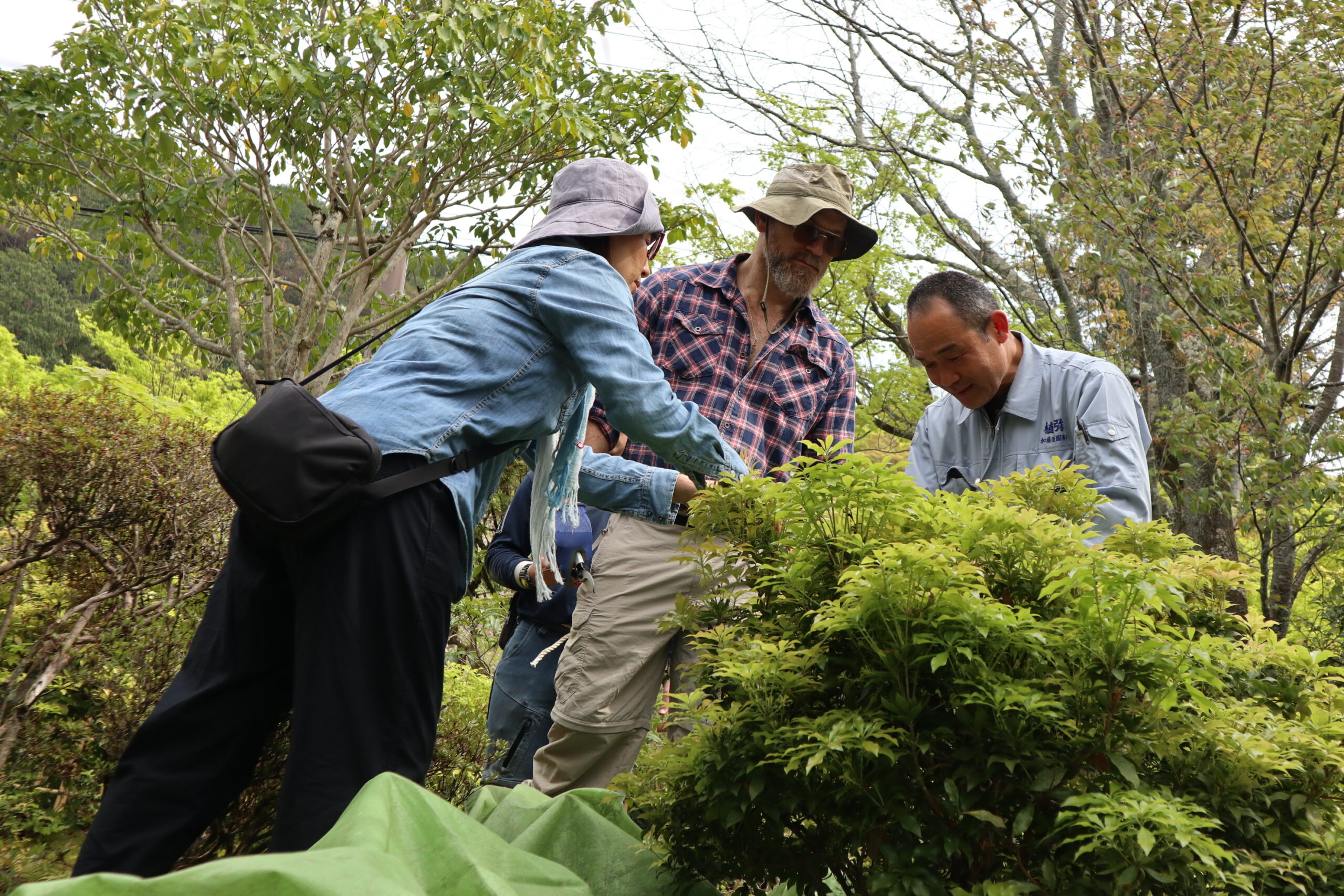
Pruning Japanese andromeda shrubs (Dainei-ken Villa)
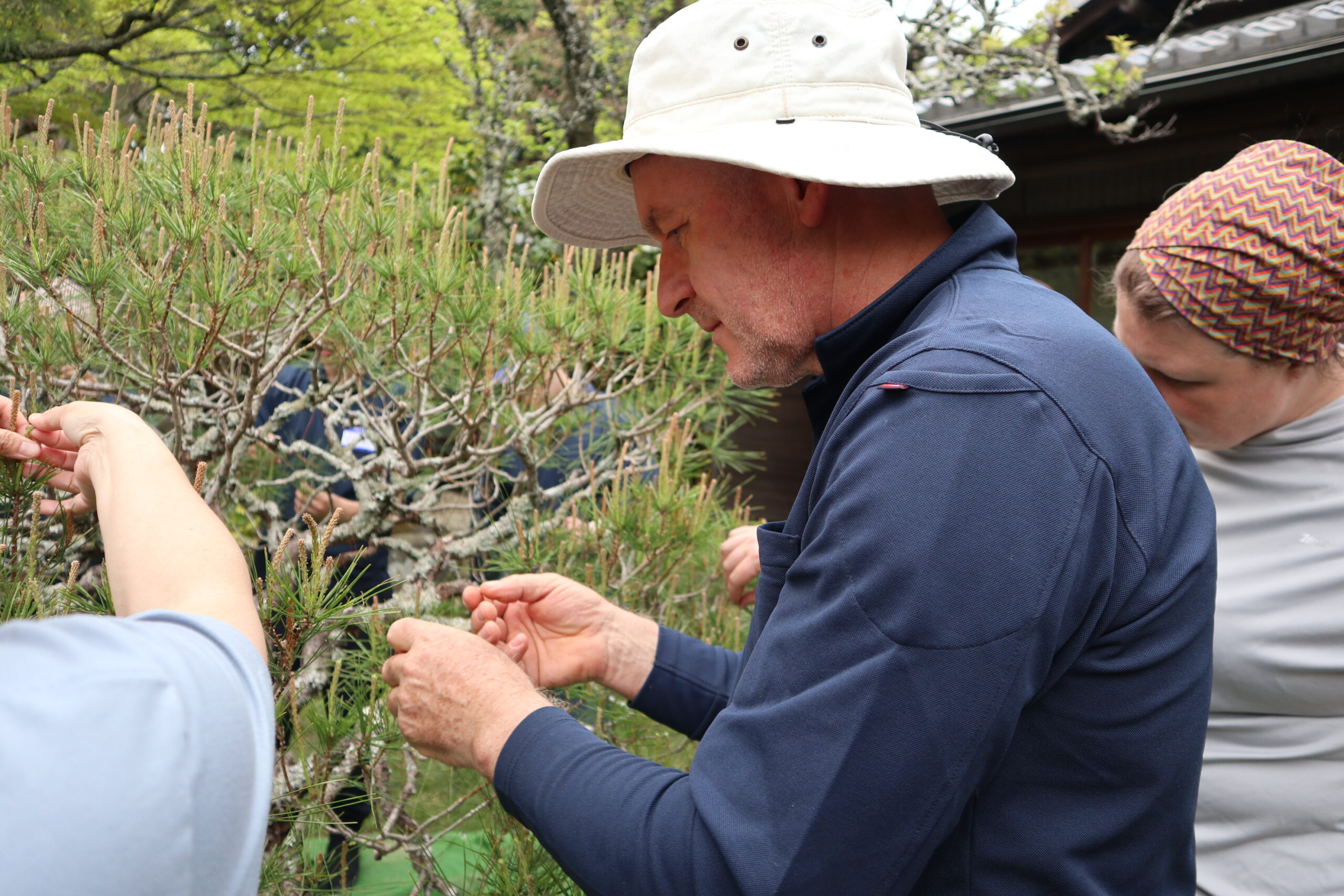
Pruning a black pine (Dainei-ken Villa)
On Day 2, we spent the morning exploring Nanzen-ji Temple, where Ueyakato Landscape has not only served as its dedicated landscape company since 1848, but has also created garden spaces since the 1960s. In particular, we focused on the gardens we created at the rear of Nanzen-ji Temple’s Hojo building in 1984. These spaces, which transition from a dry landscape scene to a tea garden and finally unfold into a natural landscape later provided the inspiration for our garden creation activity during the last two days of the course.
In the afternoon, we went to Dainei-ken Villa, another of the modern Japanese garden masterpieces in the Nanzen-ji Temple neighborhood. Here our gardeners instructed participants in how to prune the garden’s Japanese andromeda shrubs in a way that suits the garden’s total atmosphere. At the end of the day, we also explained the finer points of how pine trees in Japanese gardens are pruned in the spring and autumn seasons.
Day 3 Parallel Programs: Garden Observation (First-time group) and Nobedan Construction (Second-time group)
On Day 3, the second tier of our course program began, with first-time and repeat participants starting in separate groups. This was a rainy day, but both our participant groups showed true spirit and dedication to continue learning despite the inclement weather.
First-time participants spent the day observing Daitoku-ji, Myoshin-ji, and Chion-in, three classic gardens at Buddhist temples that use the temple setting to unfold a diverse range of garden expressions.
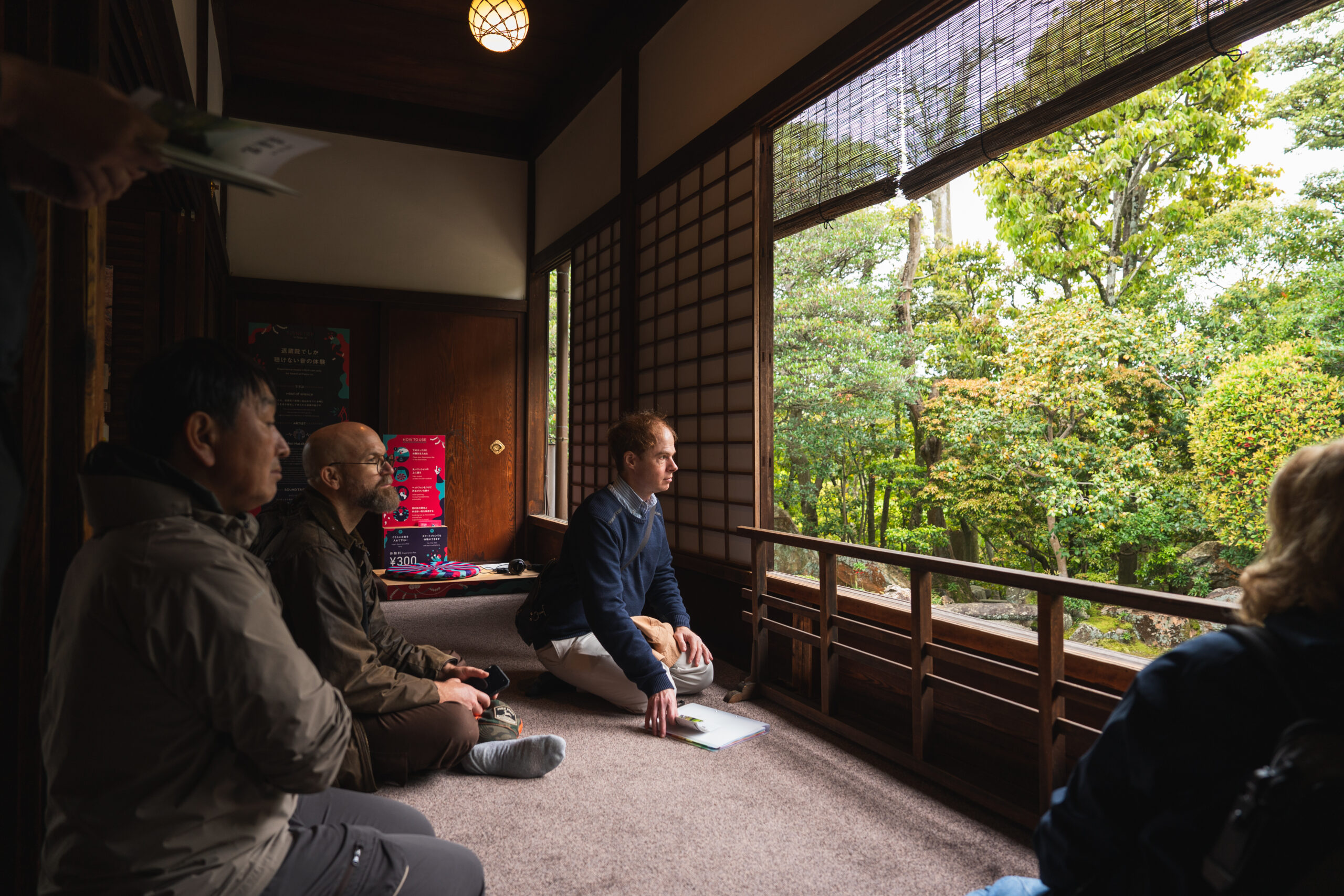
Sitting and viewing the Motonobu Garden (Myoshin-ji Temple)
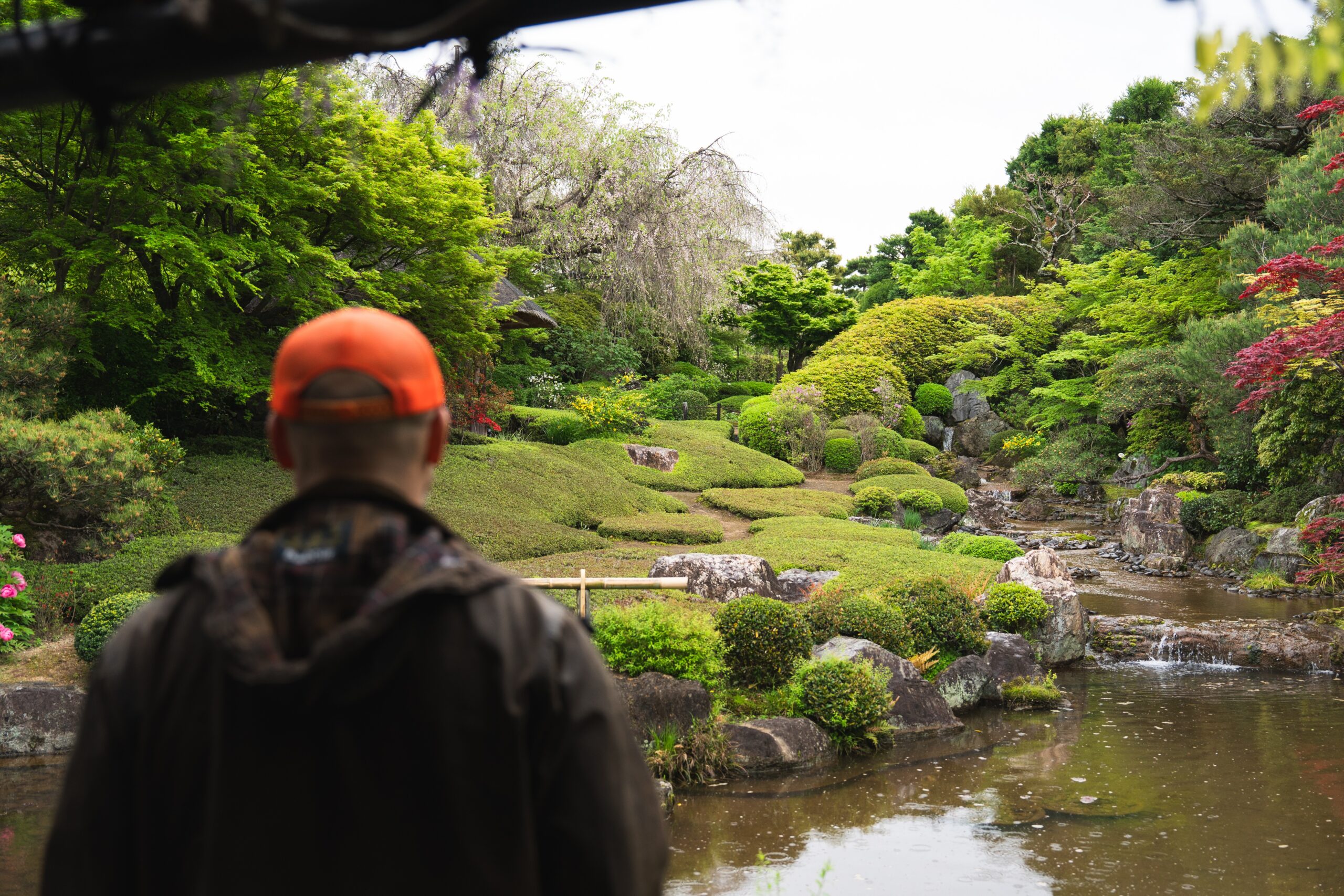
A natural landscape garden at Yoko-en (Myoshin-ji Temple)
Meanwhile…our second-time participants were learning from one of our most senior gardeners about nobedan pavement construction.
They started their course by visiting Tenju-an, one of the sub-temples in the Nanzen-ji Temple complex.
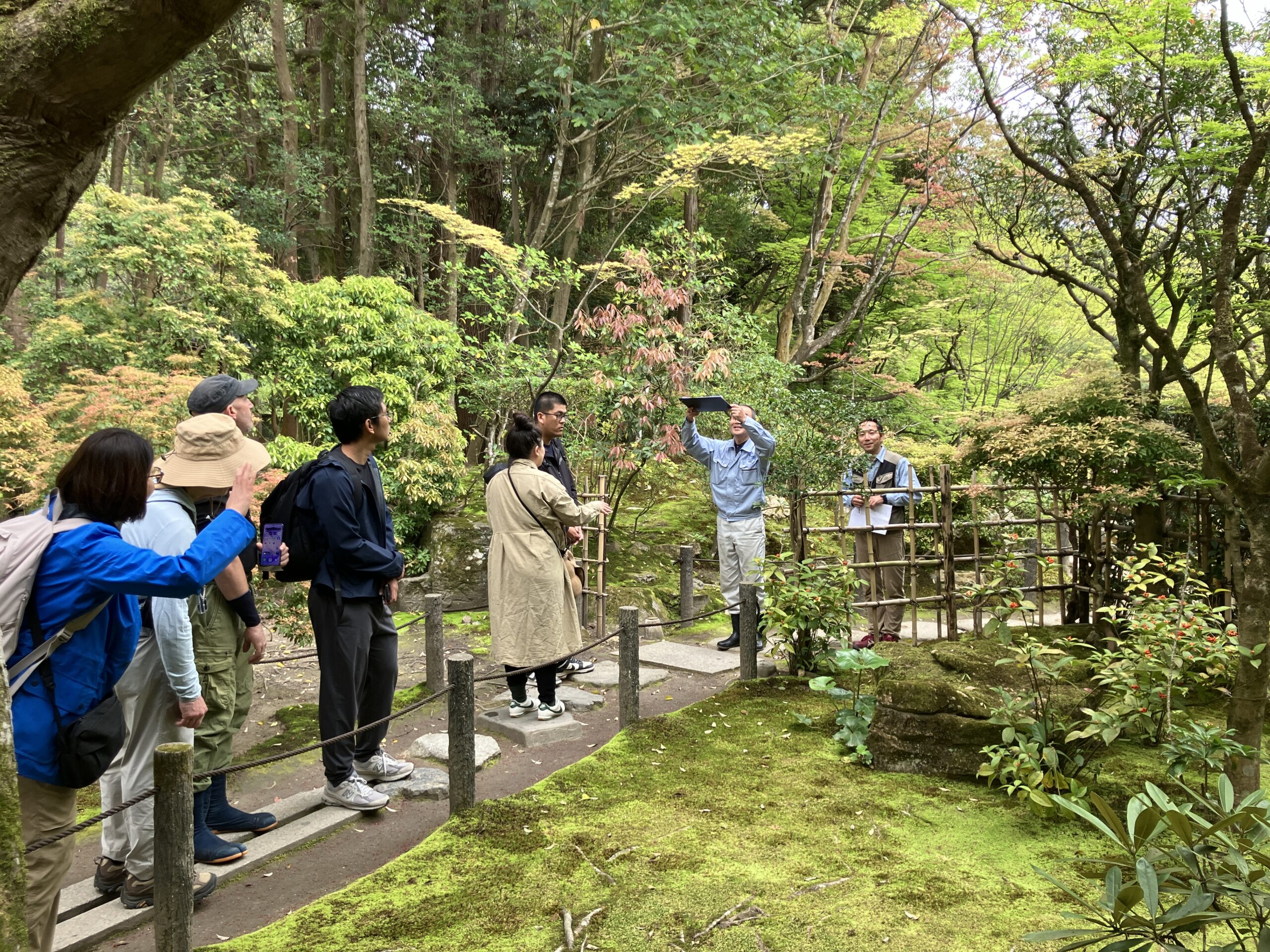
Learning the principles of nobedan pavement at Tenju-an Temple
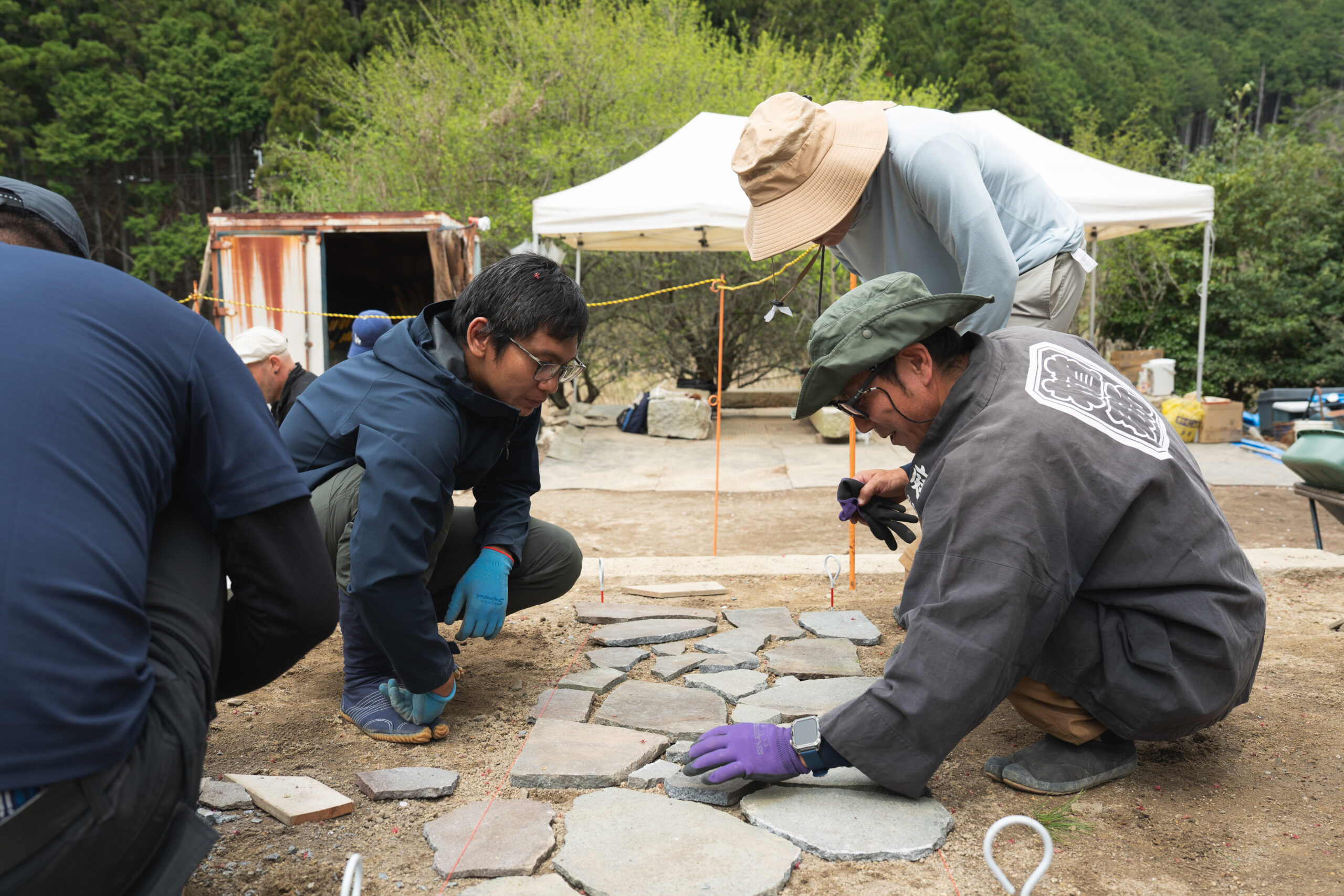
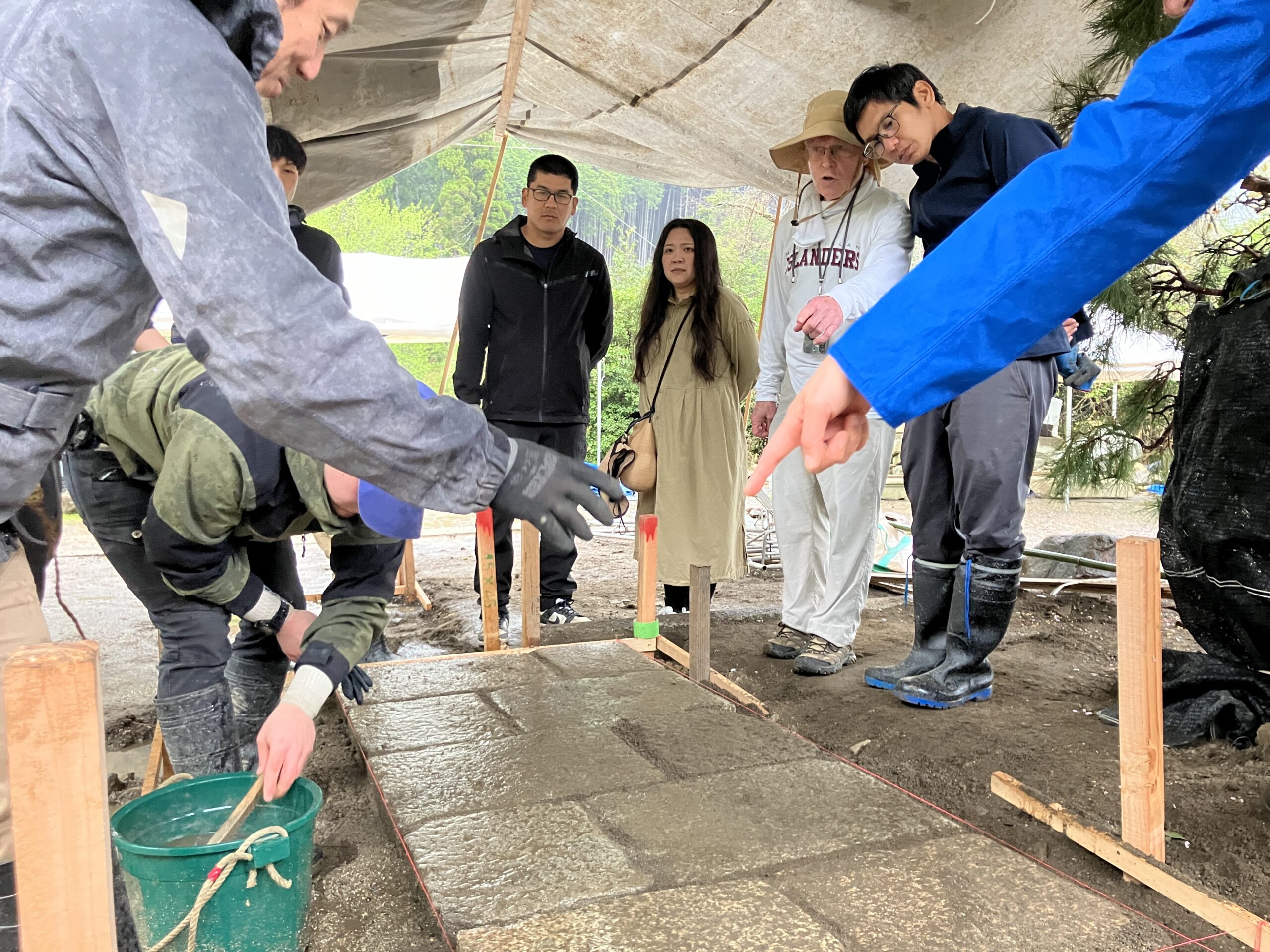
From there, they moved to our worksite in the Ohara foothills of Kyoto to start building a real nobedan pavement for our course’s Japanese garden creation exercise. Nobedan pavement typically is built in sections that transition from formal (shin) to semi-formal (gyo) and informal (so) styles. On this day, we started by creating a formal nobedan pavement. Underneath a tent pitched to provide shelter from the rain, our second-time participants got to work.
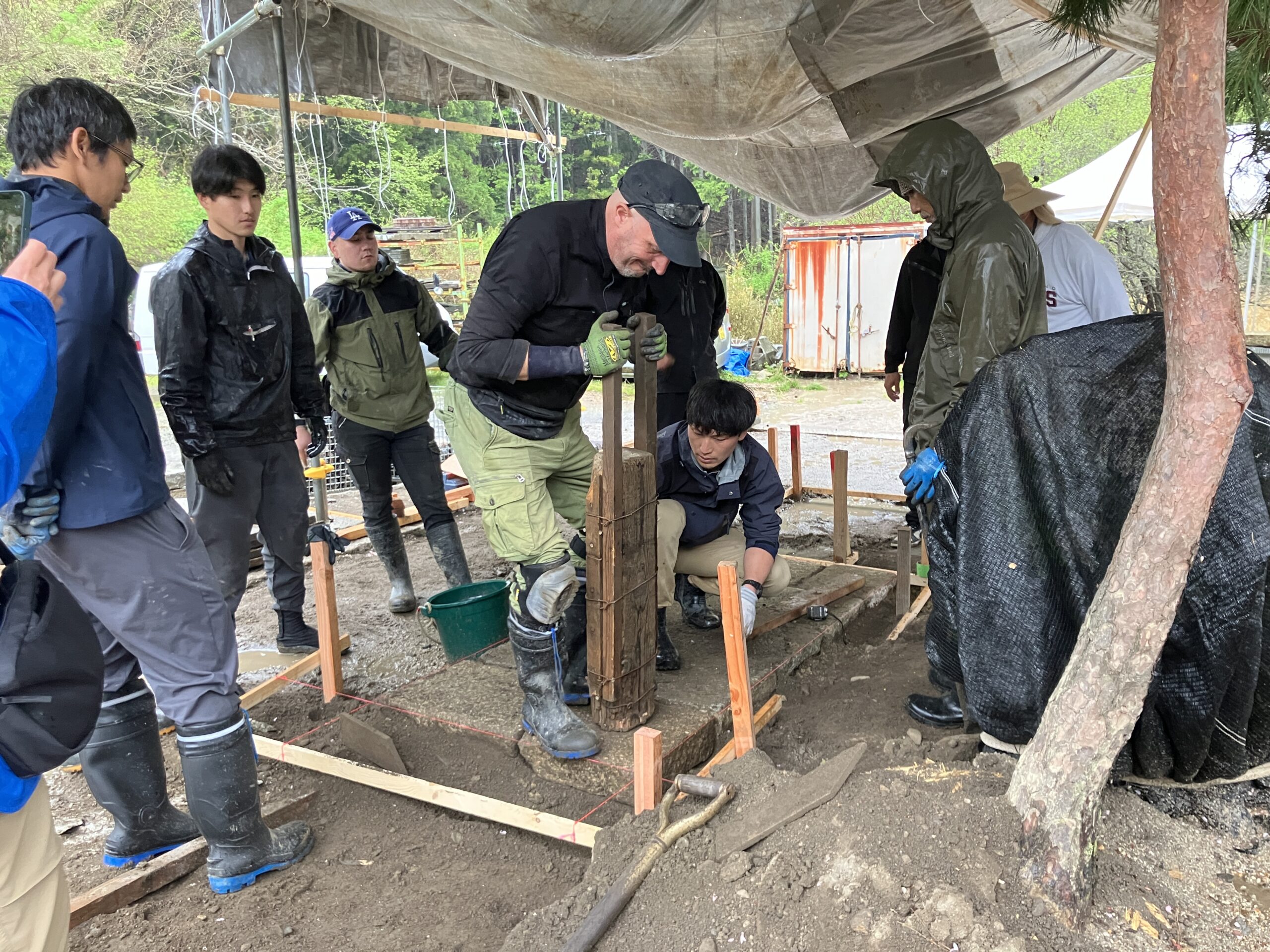
Nobedan pavement construction begins.
By the end of the day, they had completed a section of pavement in the formal style.
Days 4 and 5 Japanese Garden Creation at Ohara
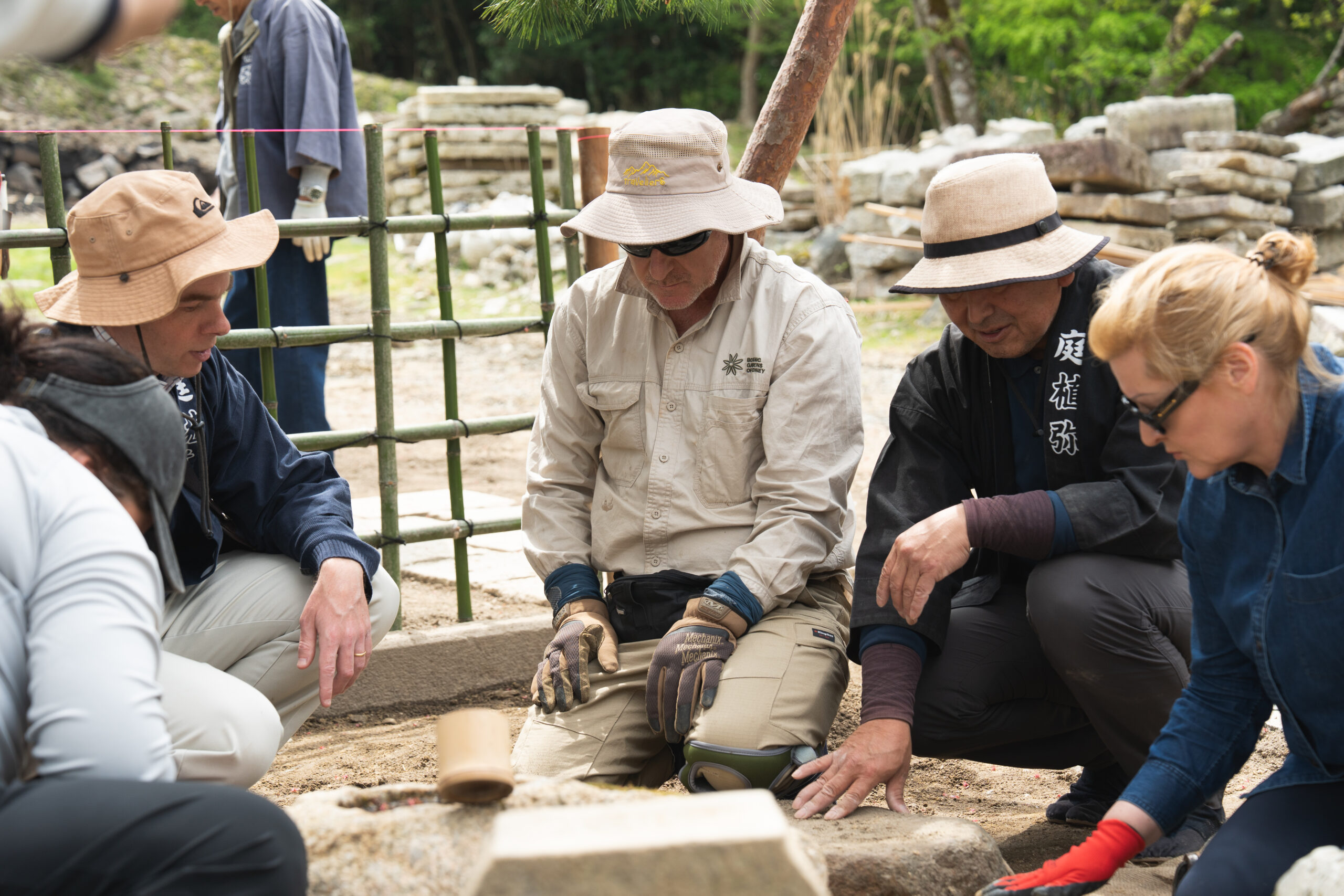
Based on what we learned over the first three days of the course, first-time and second-time participants spent Days 4 and 5 creating garden scenery together. Our vision was to create a garden that would unfold from a dry landscape into a tea garden while walking along a nobedan pavement transitioning from a formal to informal style. Over the course of the next two days, first-time participants got to work building a dry landscape stone arrangement and a crouching basin arrangement, and built a yotsume-gaki fence as a see-through partition between the two sceneries. Nearby, our second-time participants continued working on creating semi-formal and informal nobedan pavements to accompany the garden scenery.
Let’s take a look at each participant group’s work below!
First-time Participants
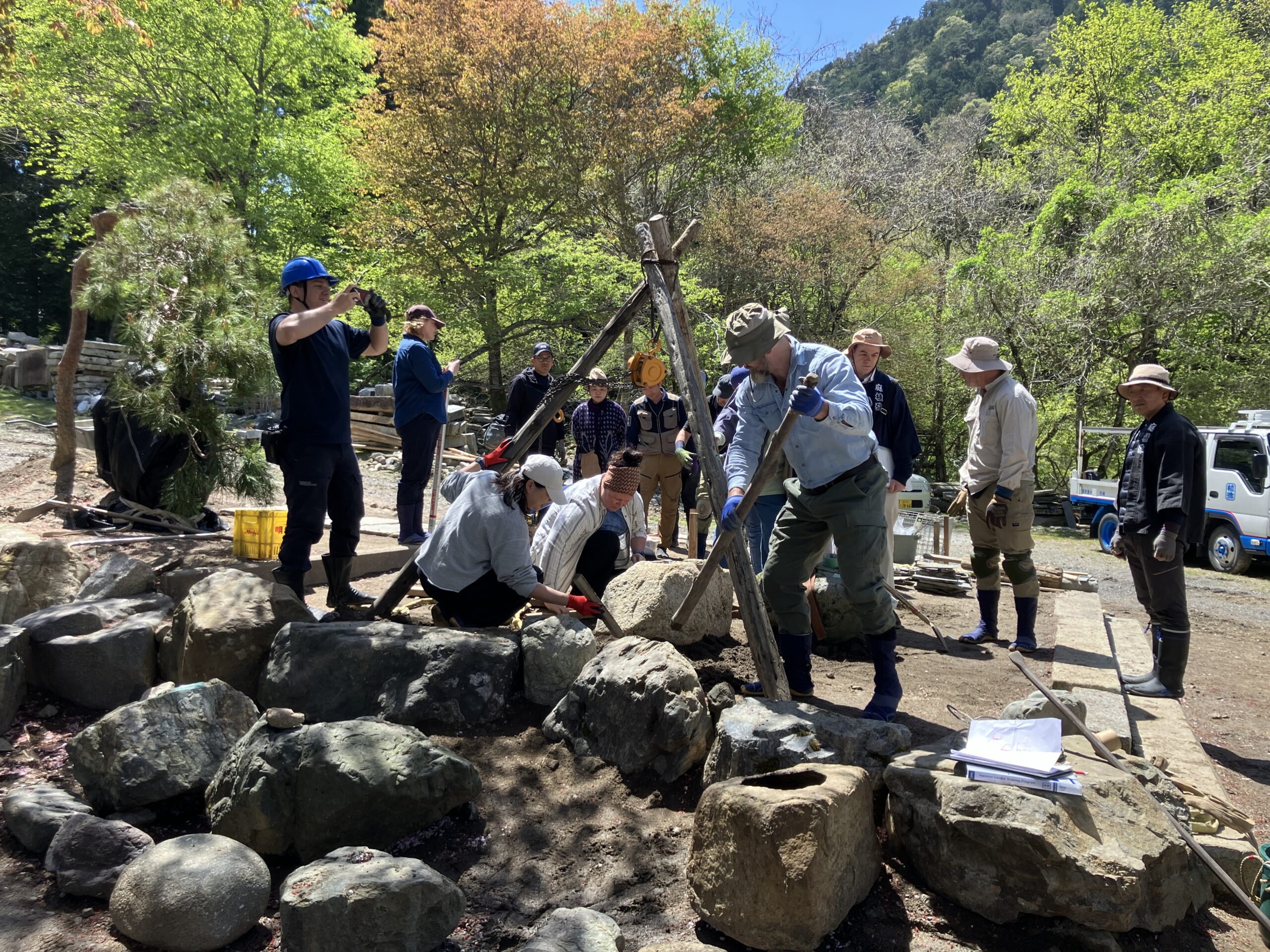
First-time participants get started creating a crouching basin arrangement.
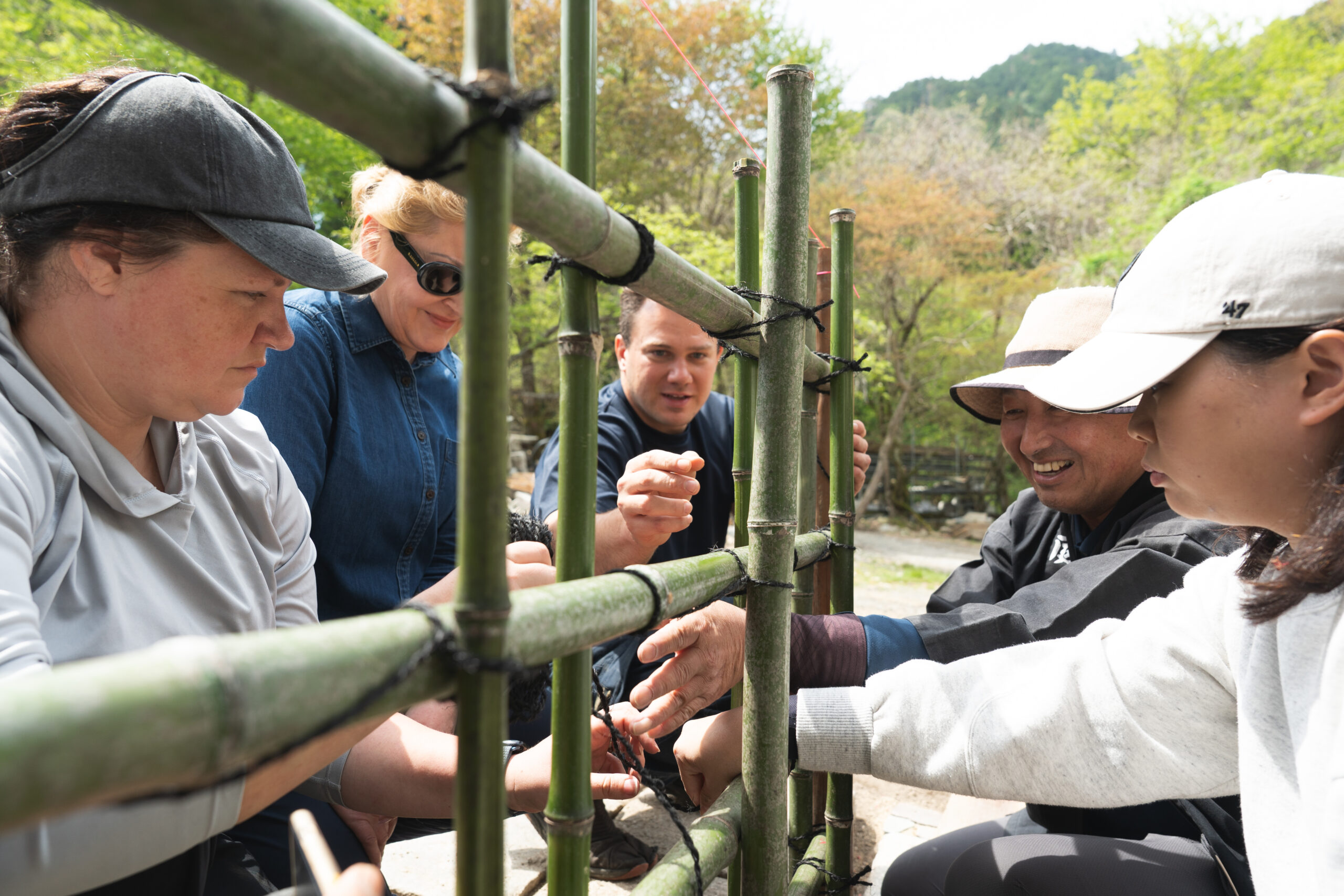
Creating a yotsume-gaki fence as a scenic partition (first-time participants).
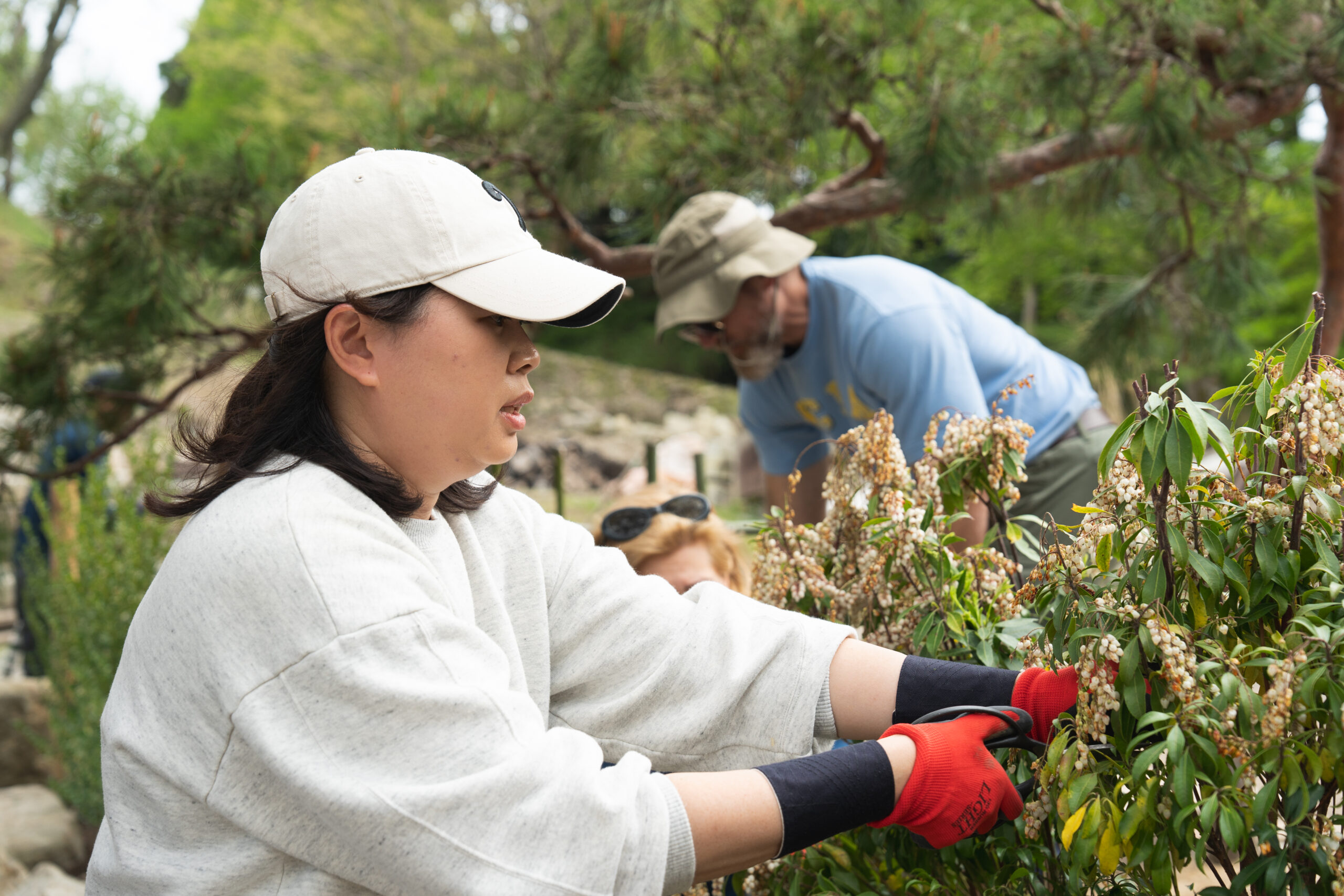
Pruning Japanese andromedas
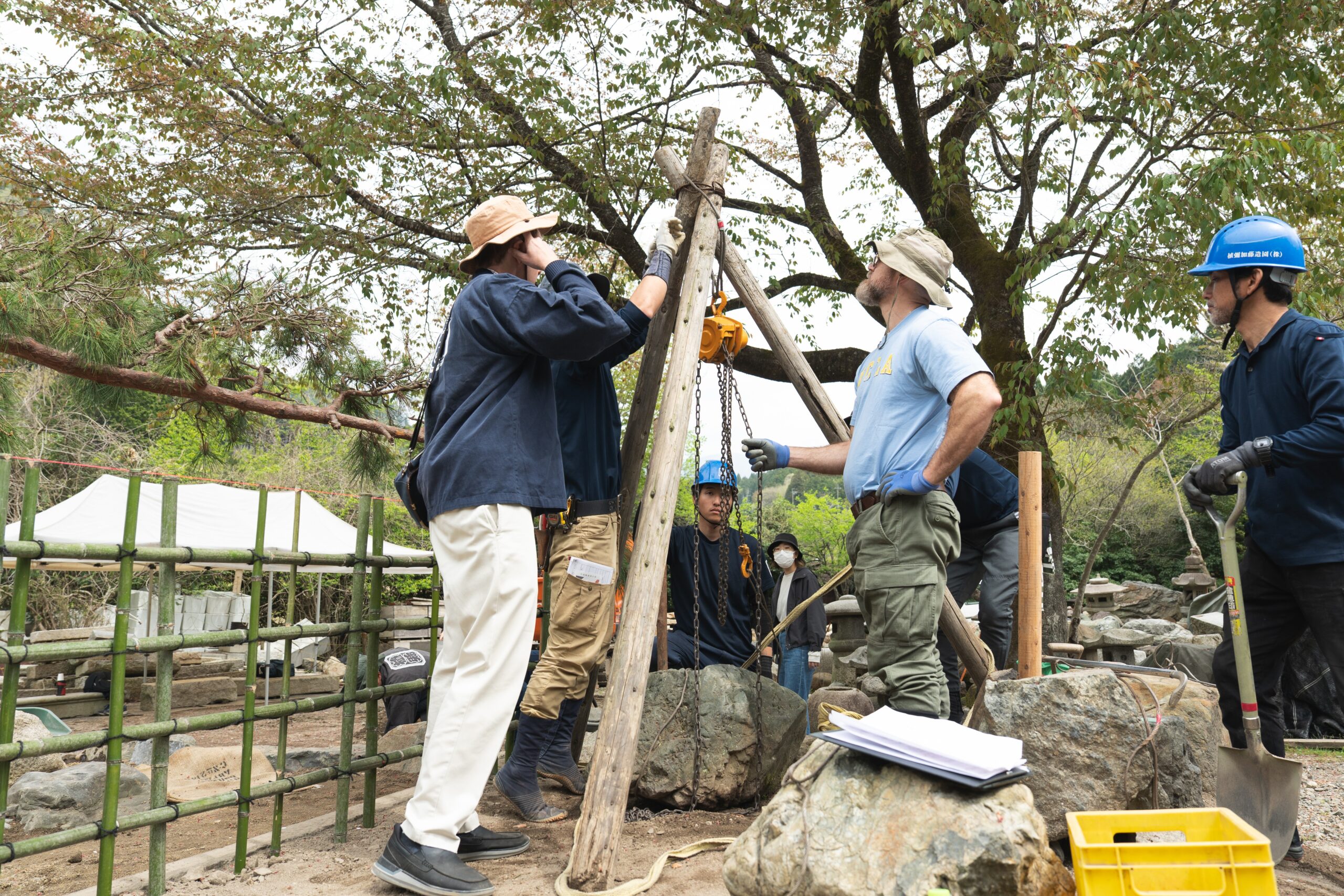
Using the sanmata tripod to create a dry landscape stone arrangement
Second-time Participants
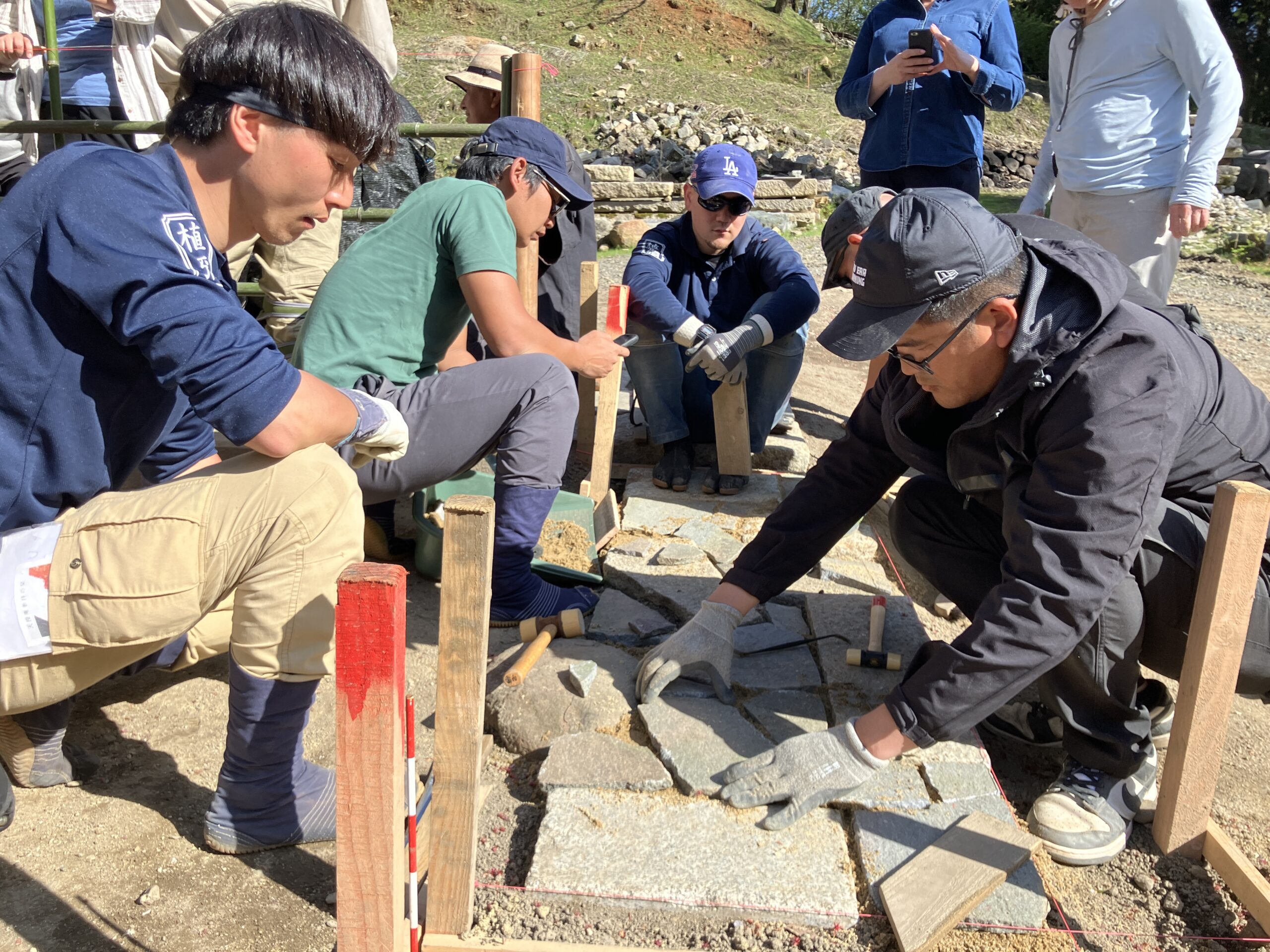
Second-time participants continued creating nobedan pavement in the semi-formal style.
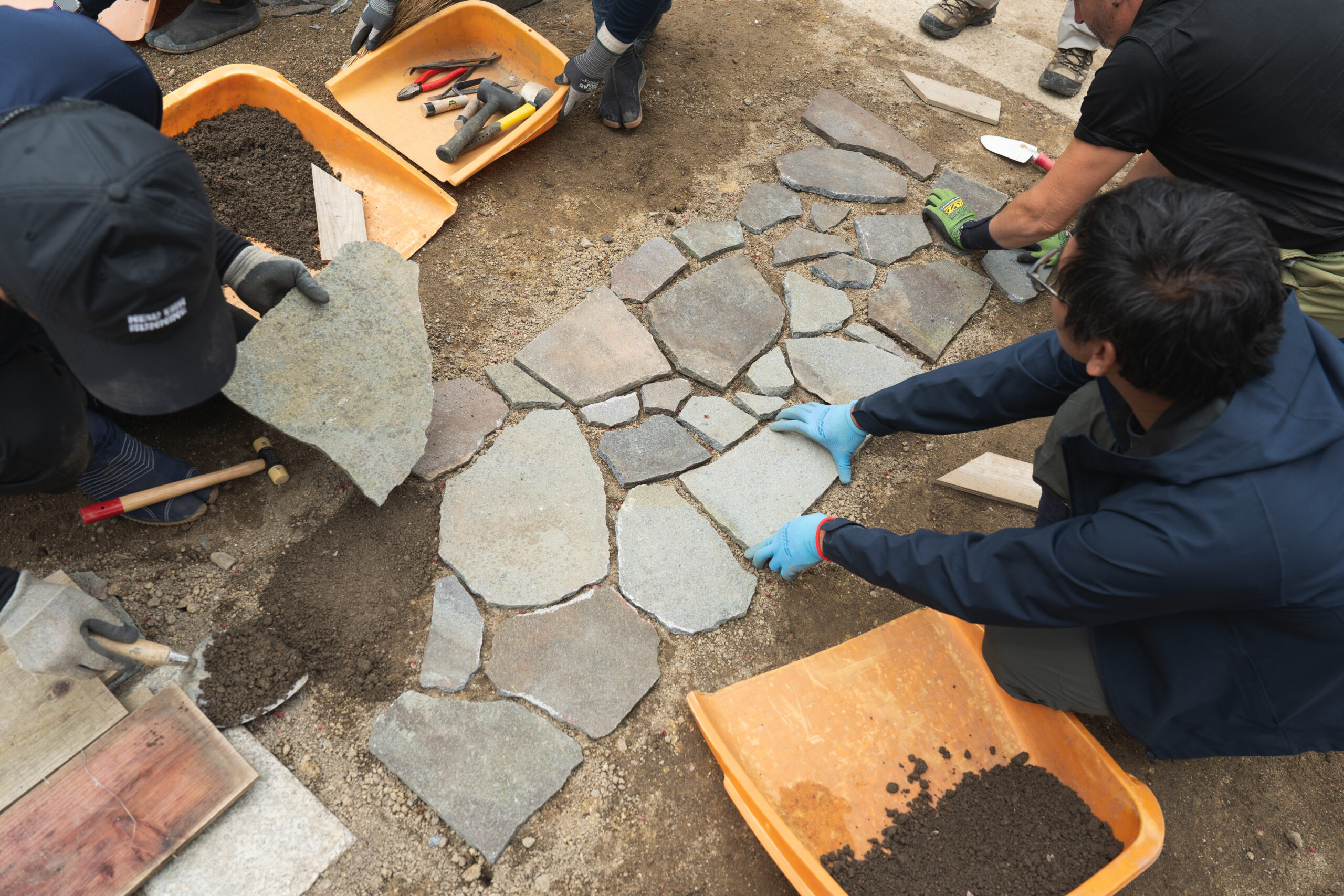
Finishing the pavement with an informal nobedan pattern.
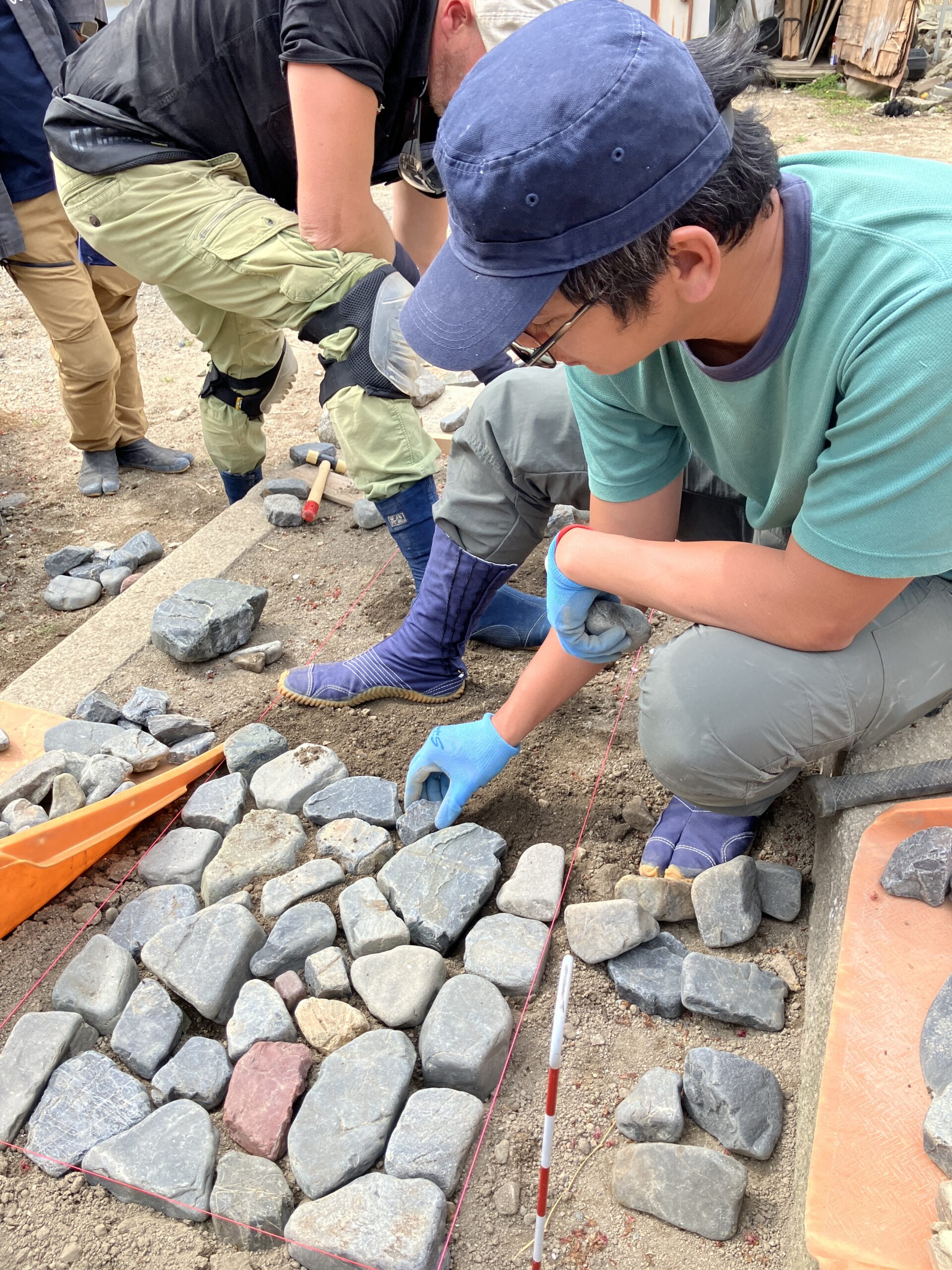
Creating an intricate “arare-koboshi” (scattered hailstone) pavement.
Results of Our Work
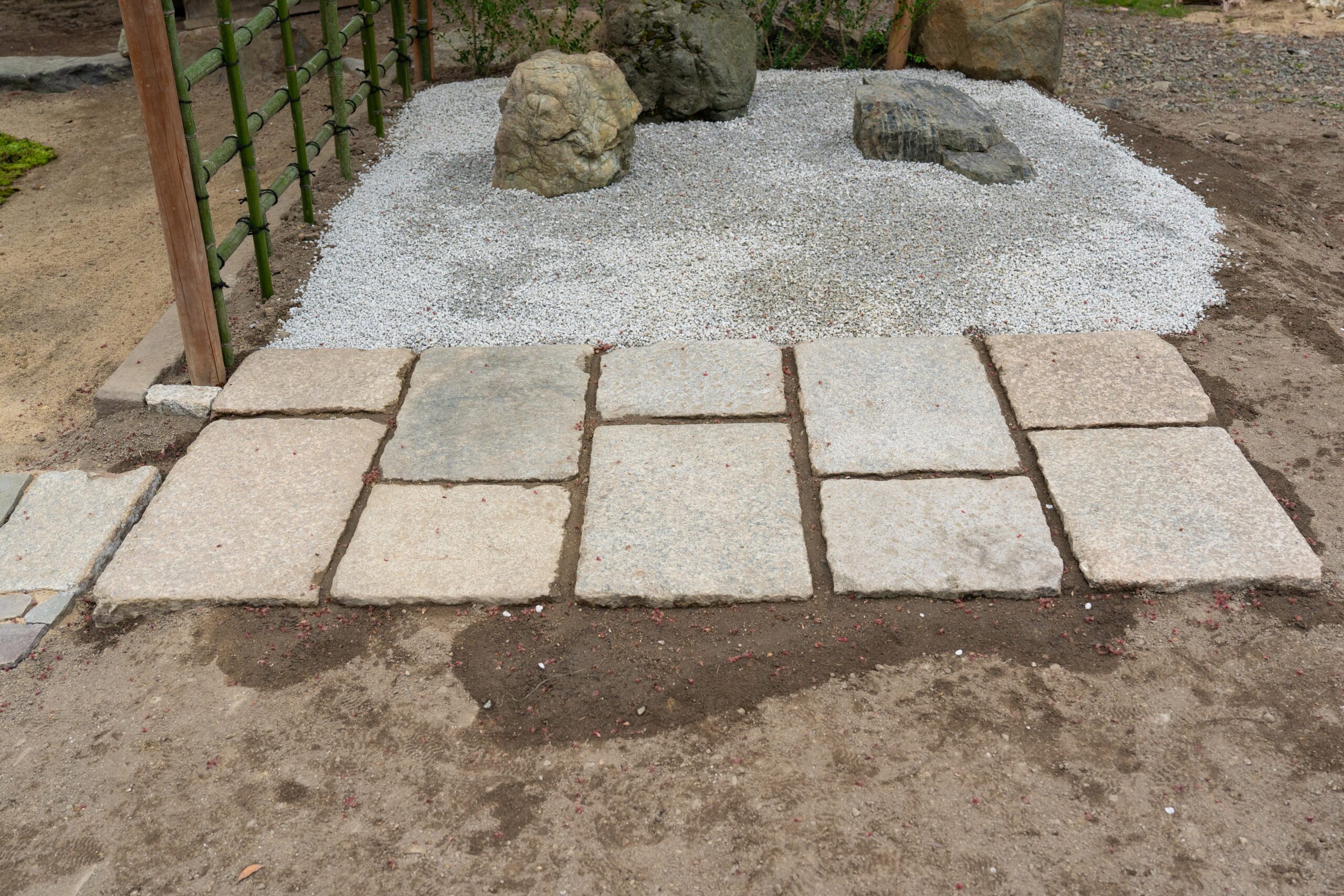
Shin pavement accompanying dry landscape scenery
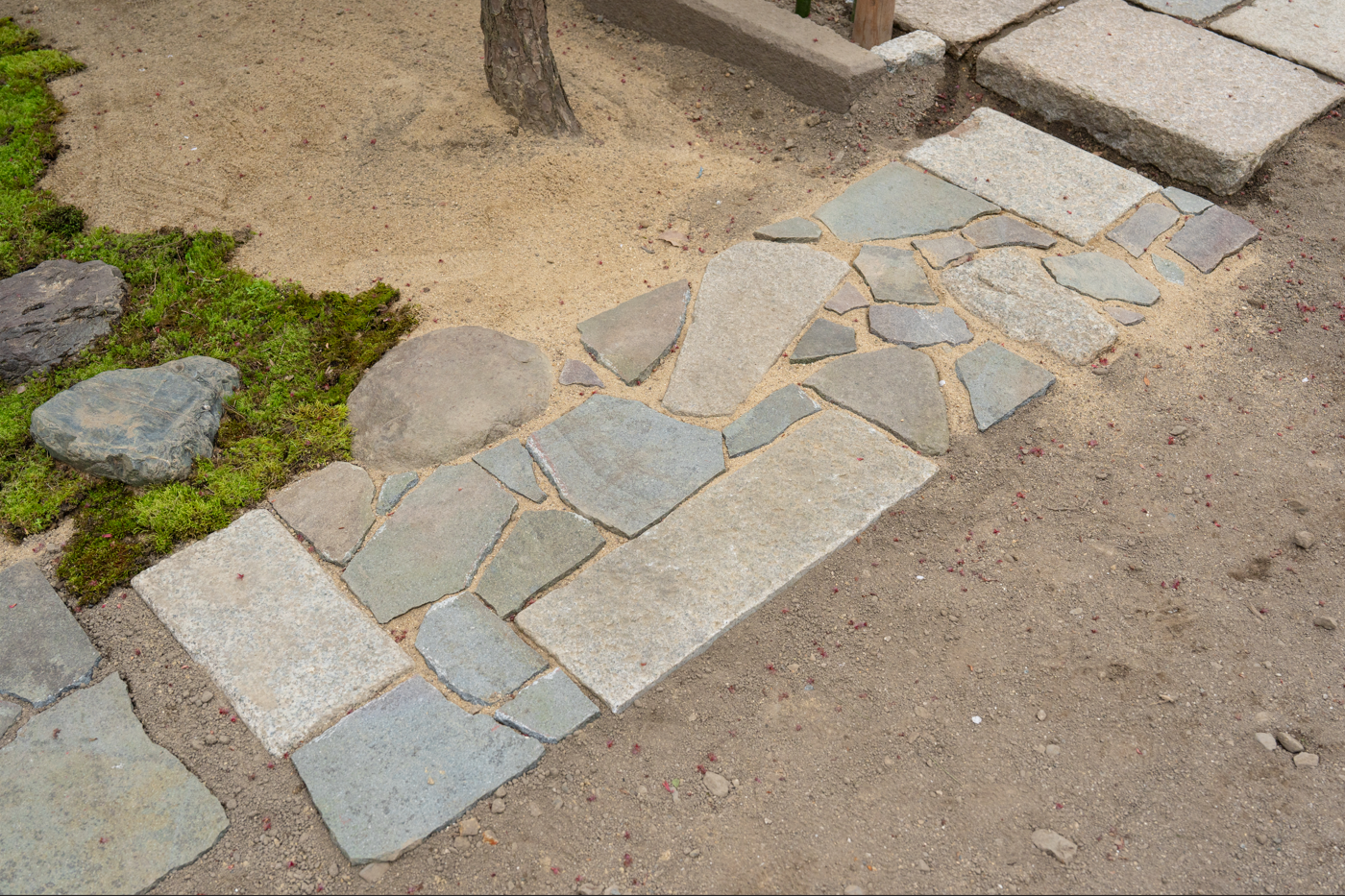
Gyo pavement at the partition between the two garden sceneries.
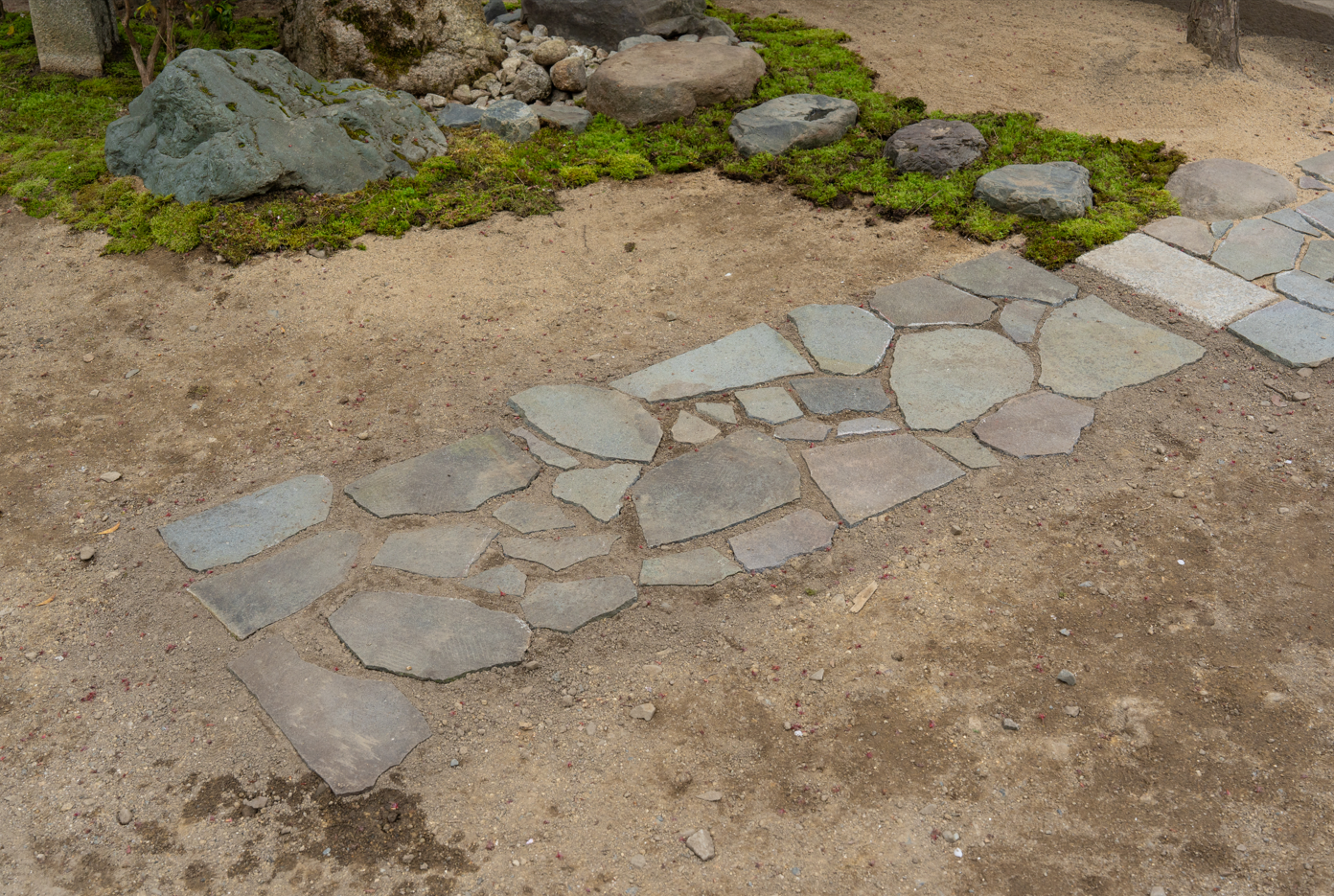
And so pavement in front of the tea garden scenery.
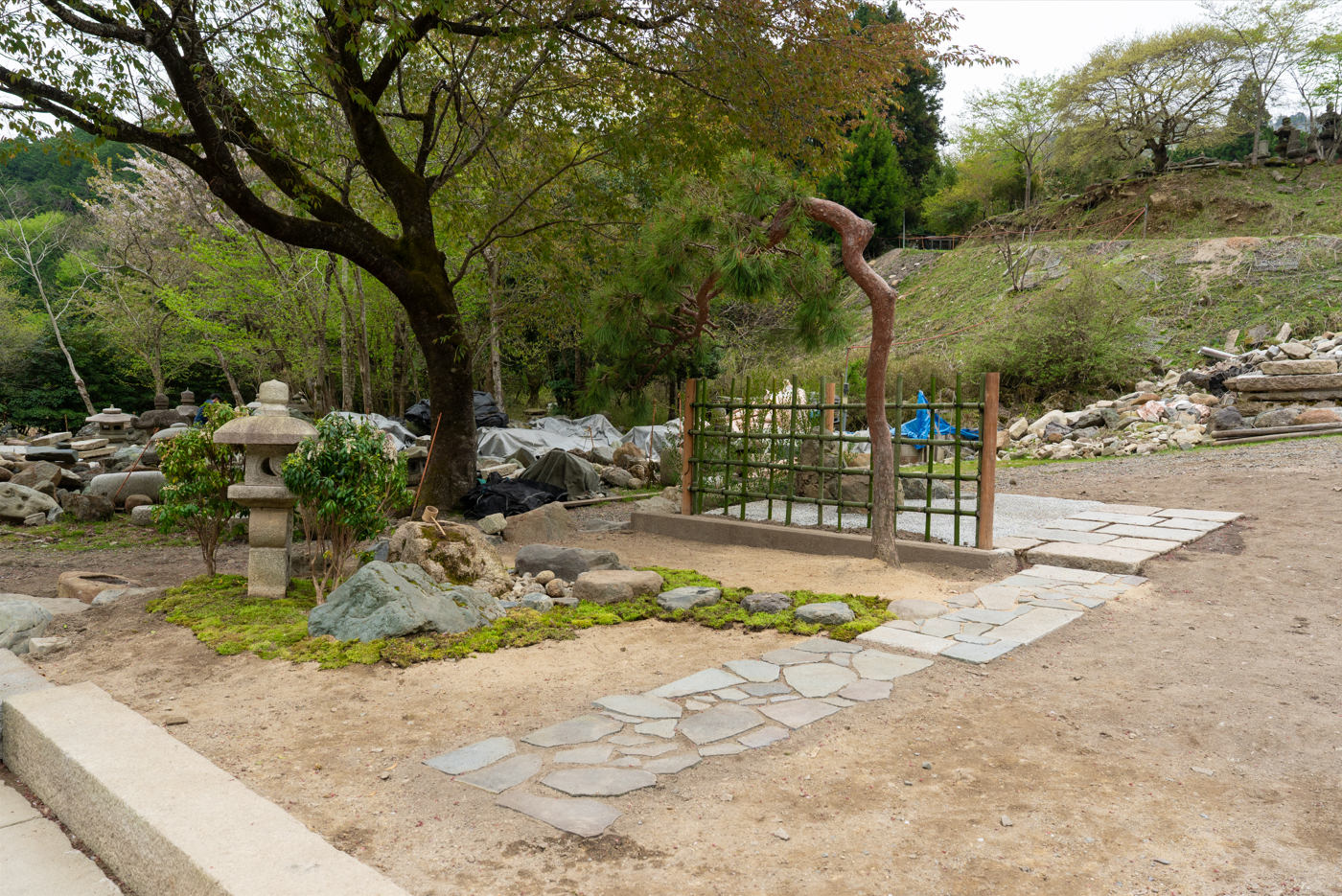
Looking Back and Looking Forward
Based on our experiences from last year, in this year’s program, we were able to show participants examples of excellent gardening in Kyoto and give them plenty of real training in the garden. In 2027, we will conduct this program again, and change its content to facilitate even more efficient learning.