
Meet the Niwashi: Ueyakato Landscape and Portland Japanese Garden’s Cooperative Gardener Training Program
To pass on the value of Japanese gardens and the skills of nurturing them, Ueyakato Landscape offers occasional training for gardeners outside Japan.
This article reports on our online training program “Meet the Niwashi” (meaning “Meet the Gardener”) that we hold jointly with Portland Japanese Garden in the United States.
Meet the Niwashi began in 2022 as a program introducing basic Japanese garden care during spring and autumn at gardens under Ueyakato Landscape’s year-round management. In this article, we introduce the content from each year this program has been held.
Portland Japanese Garden has also posted a web article about “Meet the Niwashi.”
Read it here!
2026
June 5
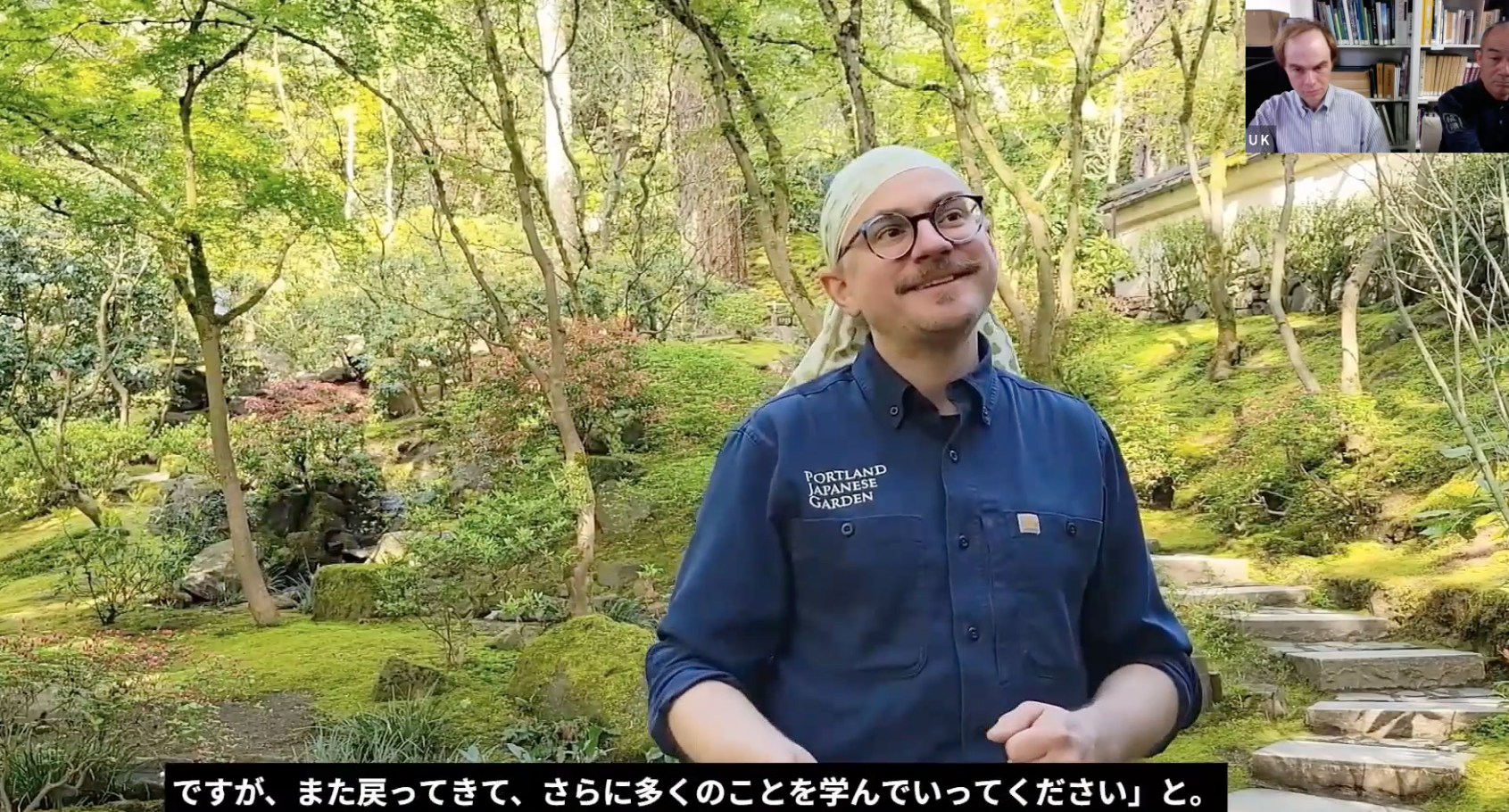
In the spring, Ueyakato Landscape and Portland Japanese Garden discussed the differences between nurturing Japanese garden scenery in Japan and the United States.
We listened to Portland Japanese Garden’s Garden Curator Hugo Torii and other gardeners share their experiences while watching videos of their work. Shigeyoshi Takemura of our Gardening Division and Michael Shapiro of our Heritage and Garden Artistry Division also shared their views of Japanese garden management in Kyoto.
2025
Ueyakato Landscape’s head gardener for Nanzen-ji Temple, Shigeyoshi Takemura, introduced his work at Dainei-ken VIlla to Portland Japanese Garden.
Originally one of the private villa residences developed during the late nineteenth and early twentieth centuries on land formerly belonging to Nanzen-ji Temple, Dainei-ken was rebought by Nanzen-ji in 2003 and is one of the gardens Ueyakato Landscape is privileged with managing.
May 13
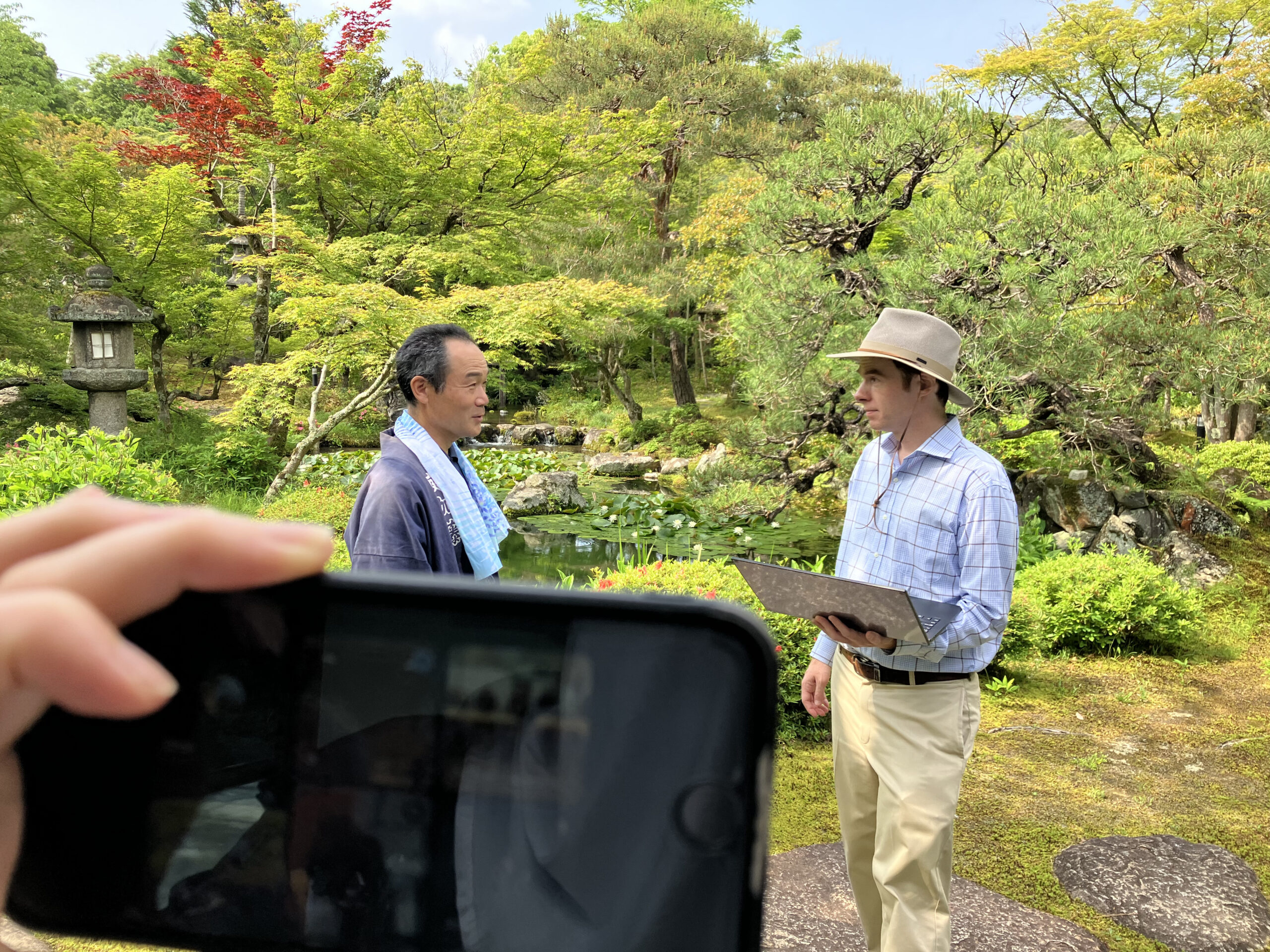
For our spring session, we took gardeners at Portland Japanese Garden on a virtual tour of Dainei-ken and asked them to imagine how they would use one hour’s time to clean the garden in the morning.
PJG’s gardeners responded thoughtfully and energetically, noting not only the importance of cleaning the scenery around guests’ feet, whether that be its stepping stones or shrubs, but also the importance of using the view seen from the garden’s teahouse to identify what areas of the garden to clean. To these insights, Takemura added that the central place of moss in Dainei-ken’s scenery made constantly cleaning fallen leaves and other debris crucial to ensuring the garden remains an environment moss can flourish in.
October 28
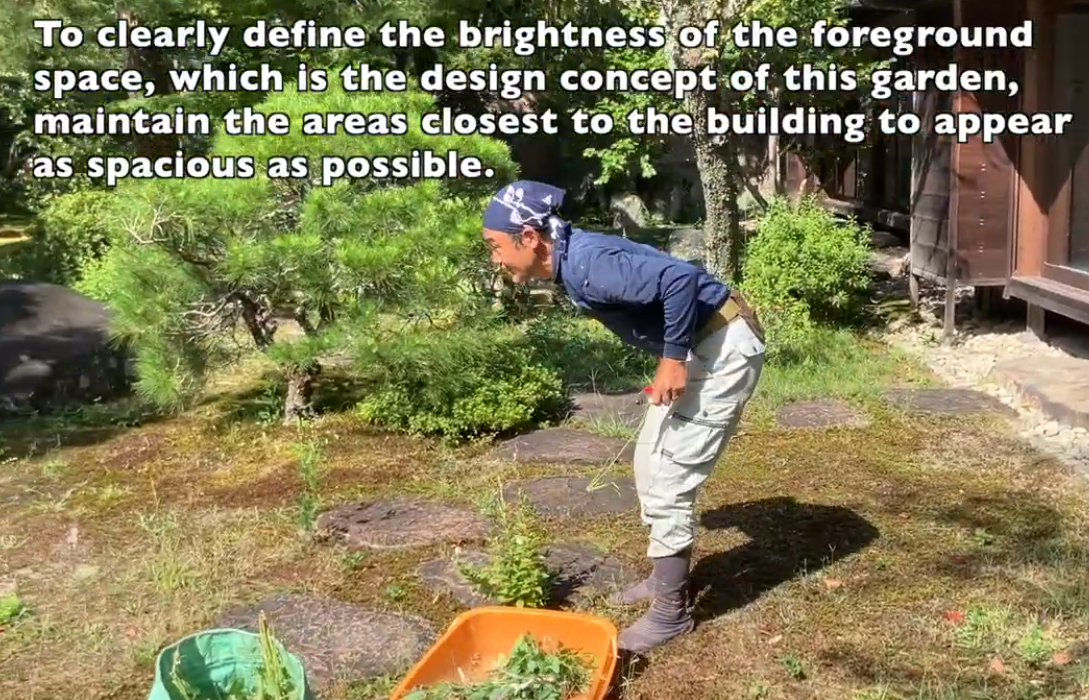
In autumn, we created a video of Takemura demonstrating how he uses a limited amount of time as efficiently as possible to clean Dainei-ken’s garden on a typical day when a guest is expected to arrive.
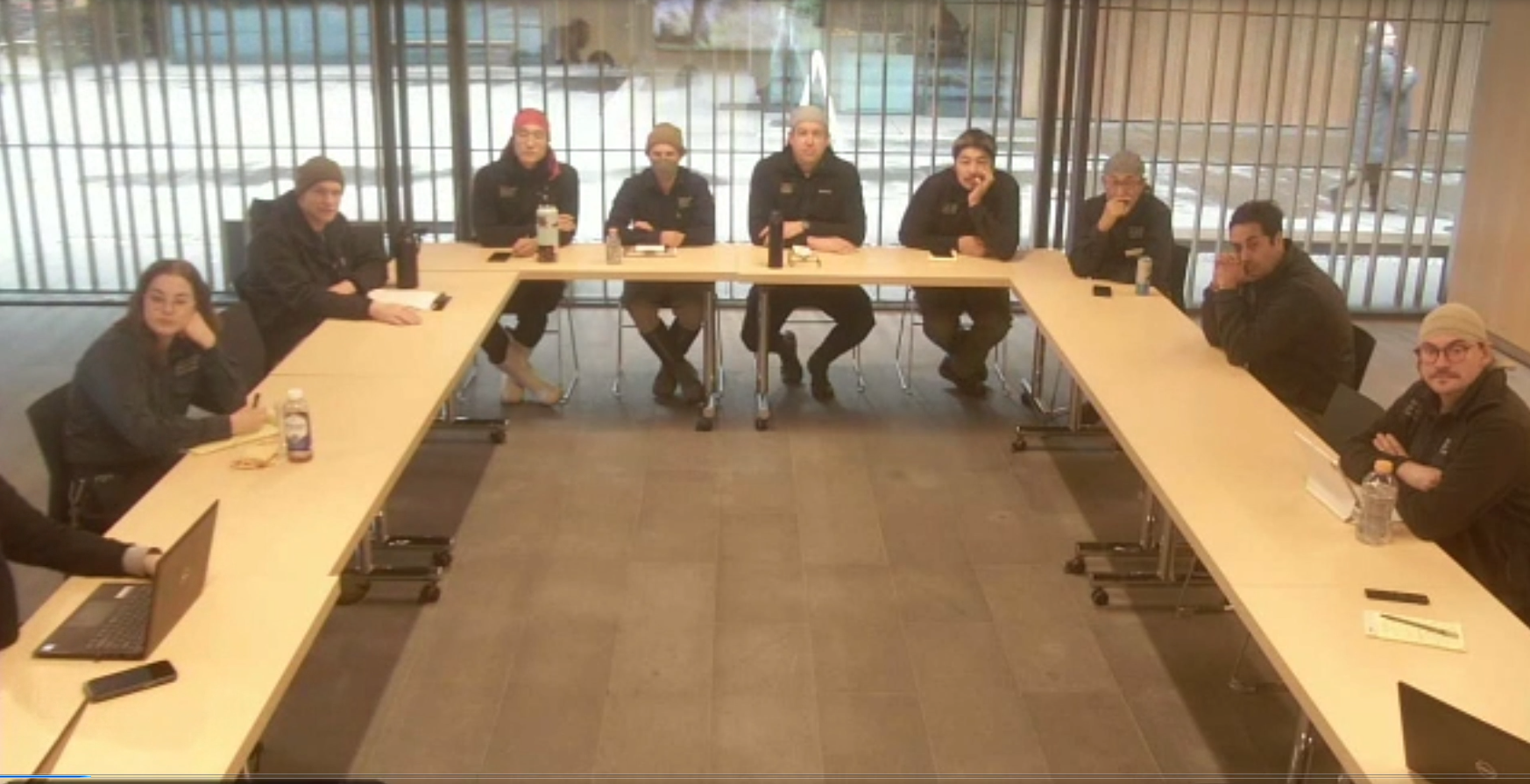
In this video, Takemura touches upon many different points to keep in mind when cleaning a garden, but perhaps the most important of these is that of setting priorities for each day without trying to clean everything at once. This topic seems to have captivated participants’ interest and we had a lively discussion about how to prioritize tasks by taking into account the garden’s relationship to its architecture and the original intent behind its design.
2024
Our Gardening Division’s Shigeyoshi Takemura demonstrated how he cares for the pine trees at Nanzen-ji Temple.
Takemura explained the scenic roles assigned to each pine tree on these broad temple grounds and demonstrated how he manages them accordingly.
May 7
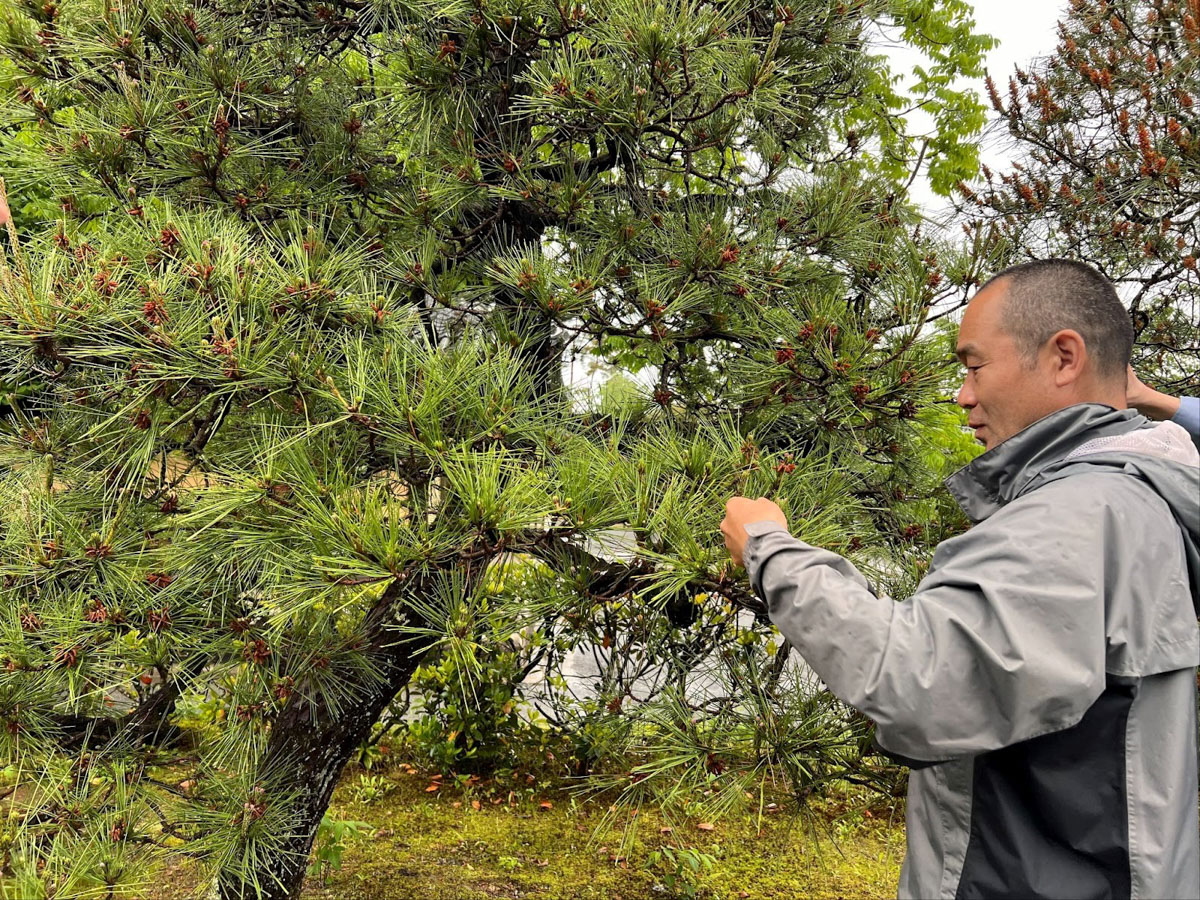
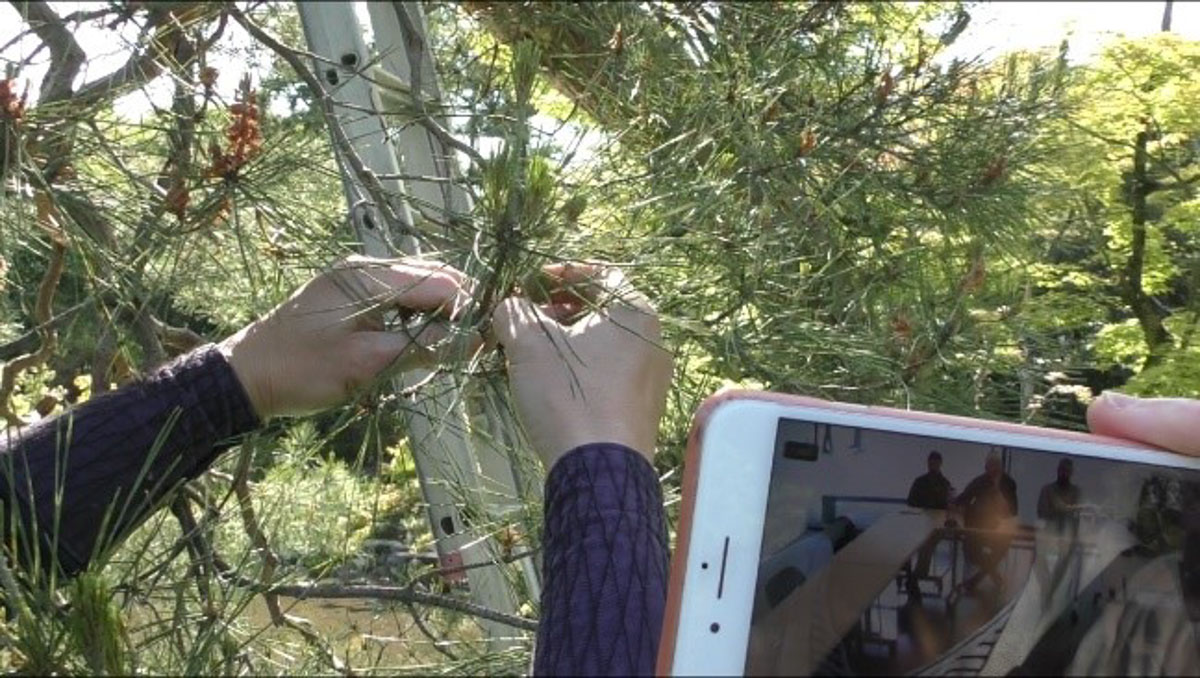
Pine candles growing during the spring are picked to maintain the tree’s overall shape and foliage density. We thought together about how Nanzen-ji Temple’s different pine trees have been cared for in the past and what future role they will play as part of the landscape. We then aimed to achieve the right foliage density and tree shape.
September 19
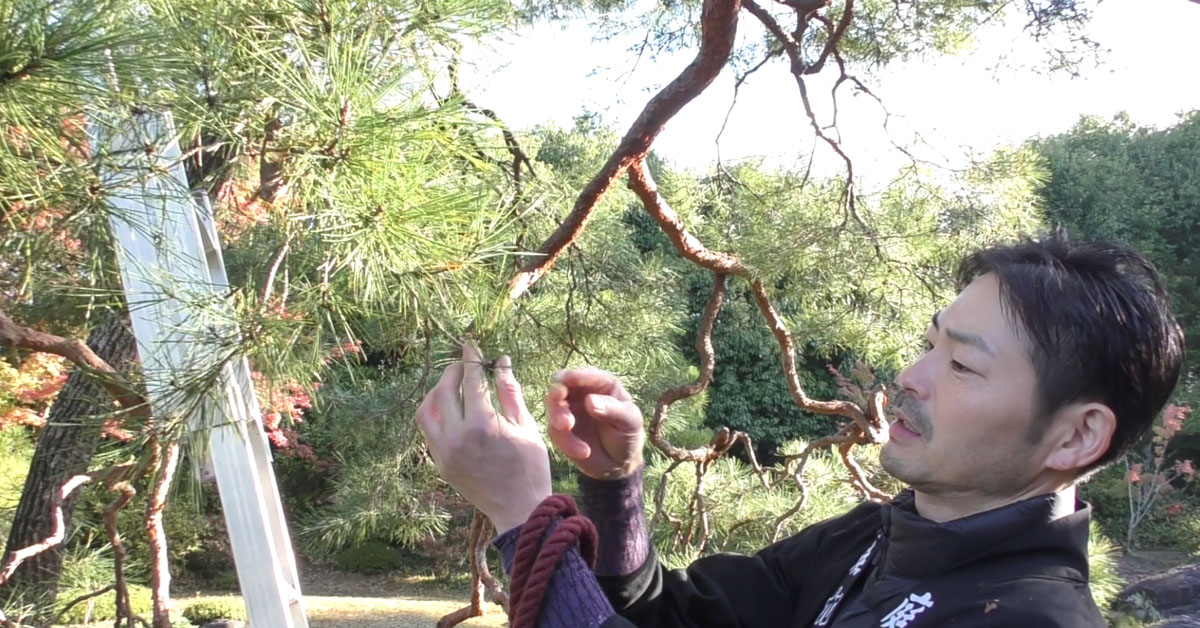
In autumn, old needles are plucked away by hand, leaving just green needles in winter. Veteran gardeners can advance this work efficiently by imagining what the tree’s shape looks like without ever stepping away from their ladders.
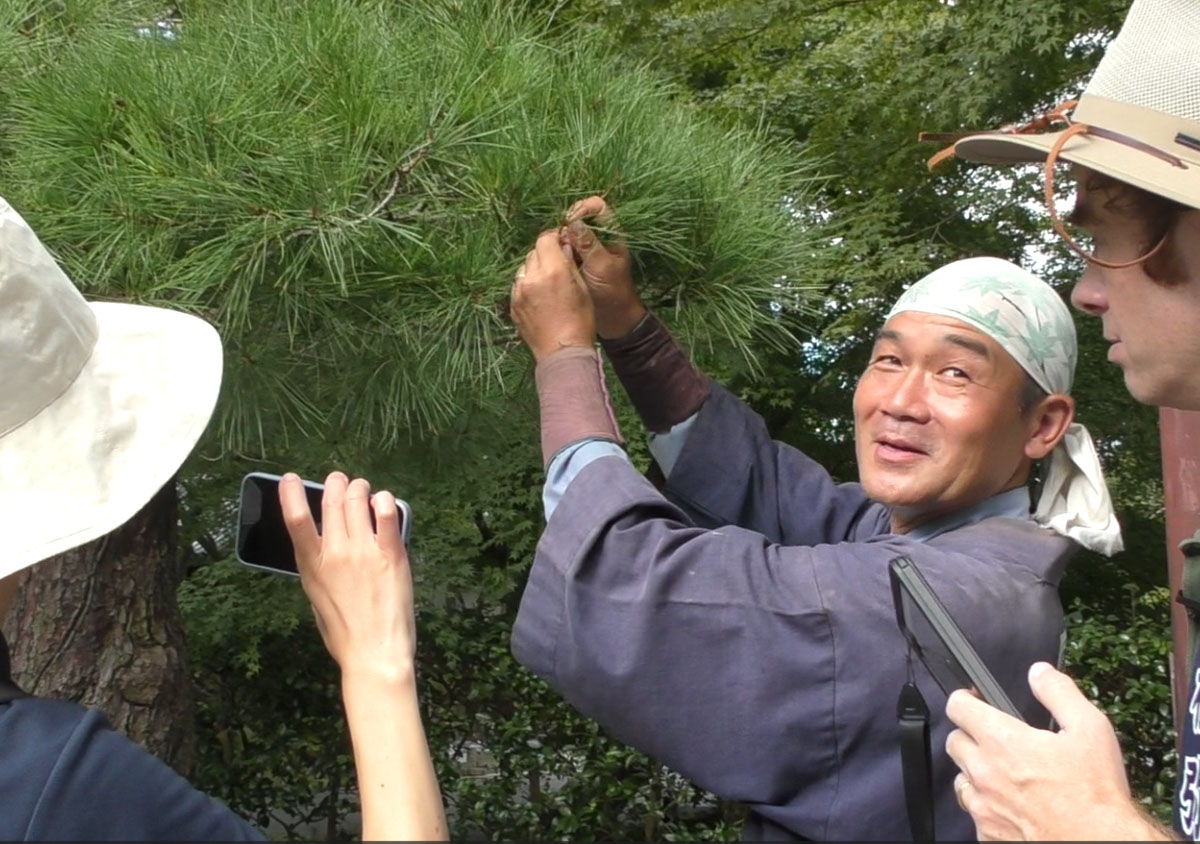
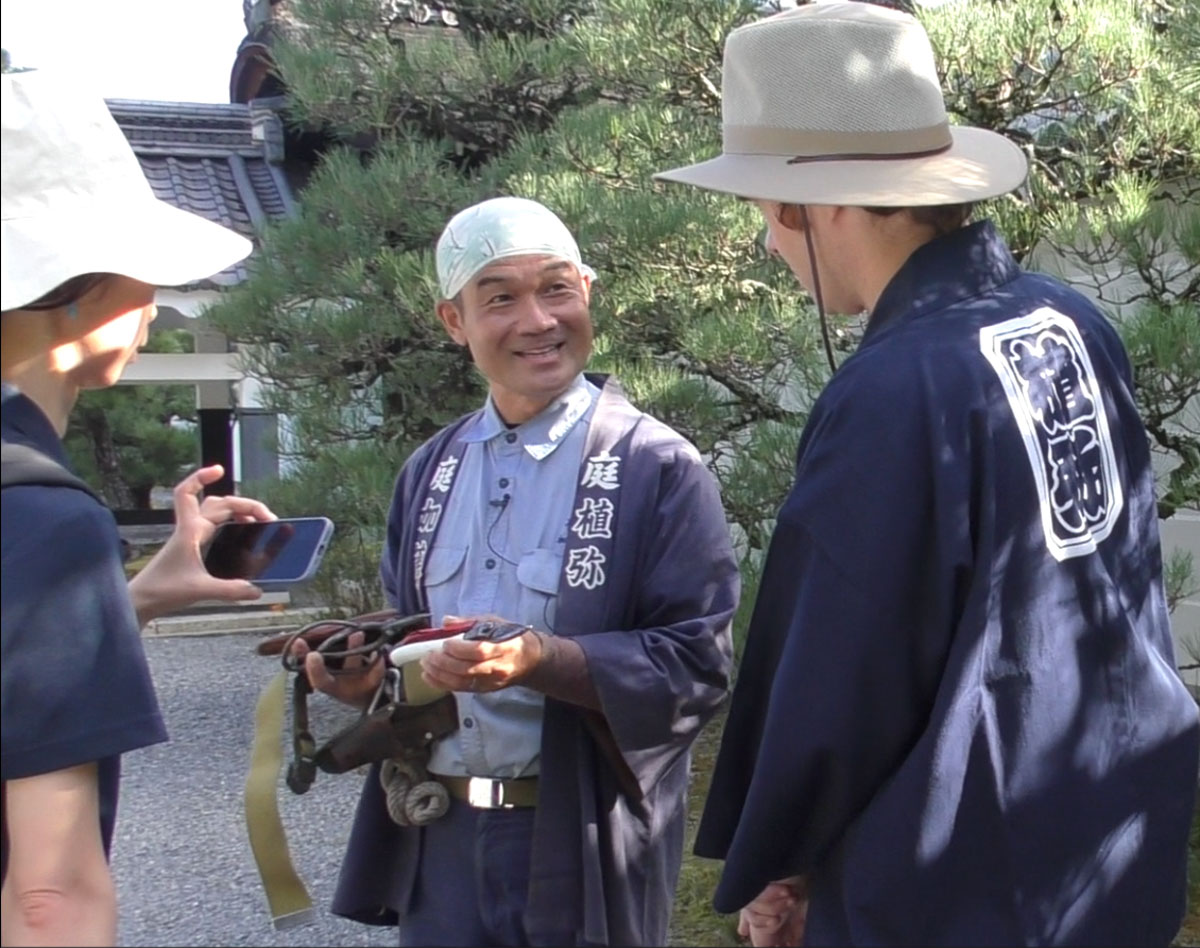
During instruction, we explained in detail how to care for tools and safely work in high places.
We learned a lot about the challenges and meaningfulness of managing Japanese gardens in countries with different cultures outside Japan.
2023
Kenta Deguchi of our Gardening Division explained how to care for moss and pine trees. He gave live demonstrations of how to manage the total scenery of Murin-an, one of Japan’s nationally designated Places of Scenic Beauty, and explained how the differences between red pines and black pines affect the care he gives each of them.
February 27
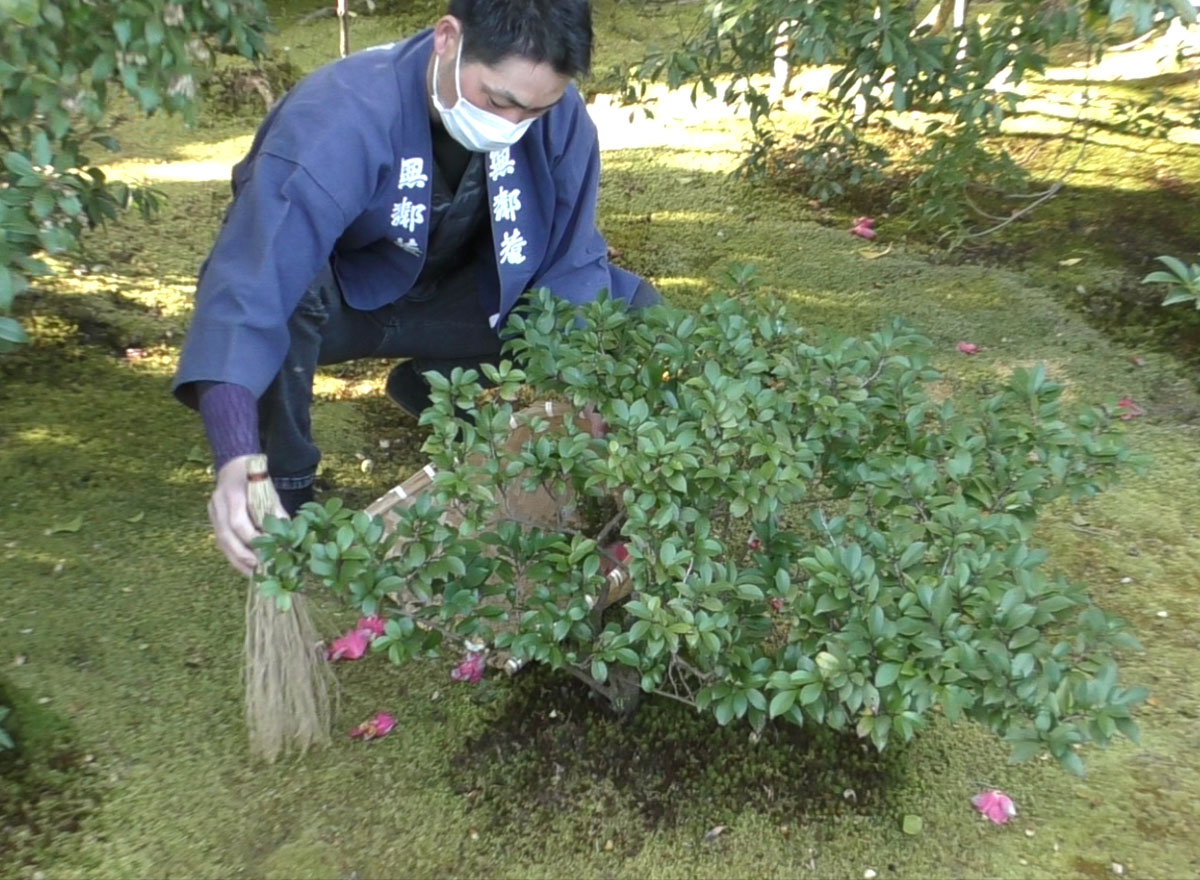
The most important part of moss care is cleaning. We demonstrated how to use the tebōki (Japanese hand broom), how to carry your tools while you walk, and the functionality of tabi, the split-toe footwear that Japanese gardeners use for their work.
May 16
We showed how to finish the look of the pine tree while keeping in mind its overall position within Murin’s overall garden composition. We also demonstrated the work of pine candling at two speeds: the regular speed of actual work, and a slower speed for the purposes of demonstration.
November 14
Using Murin-an's red pines and black pines, we explained the roles different tree species play inside a garden's scenery. We also explained how to judge the right foliage density to aim for when pruning a pine tree.
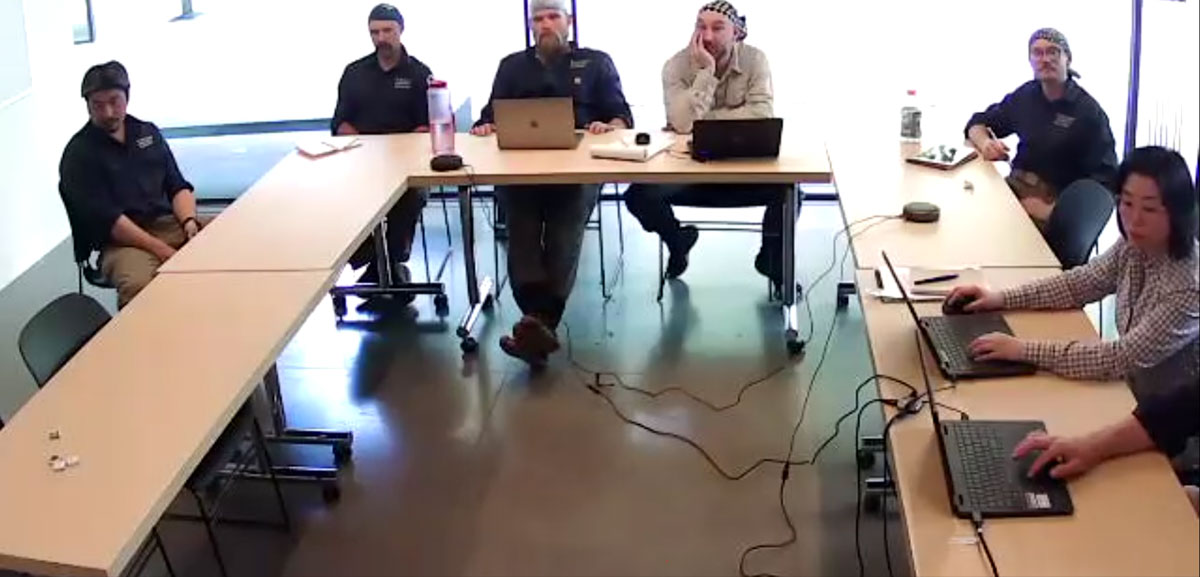
Each session features a Q&A session where the gardener conveys their experiences learning the technique under discussion. This provides an opportunity for the instructor to rethink the meaning of garden management work from a fresh perspective.
2022
This session began with a dialogue between Hugo Torii of Portland Japanese Garden and Ueyakato Landscape gardener Kenta Deguchi, who then answered questions from Portland Japanese Garden gardeners. During the session, we also demonstrated how to care for pine trees, one of the most important elements in Japanese garden management.
July 11
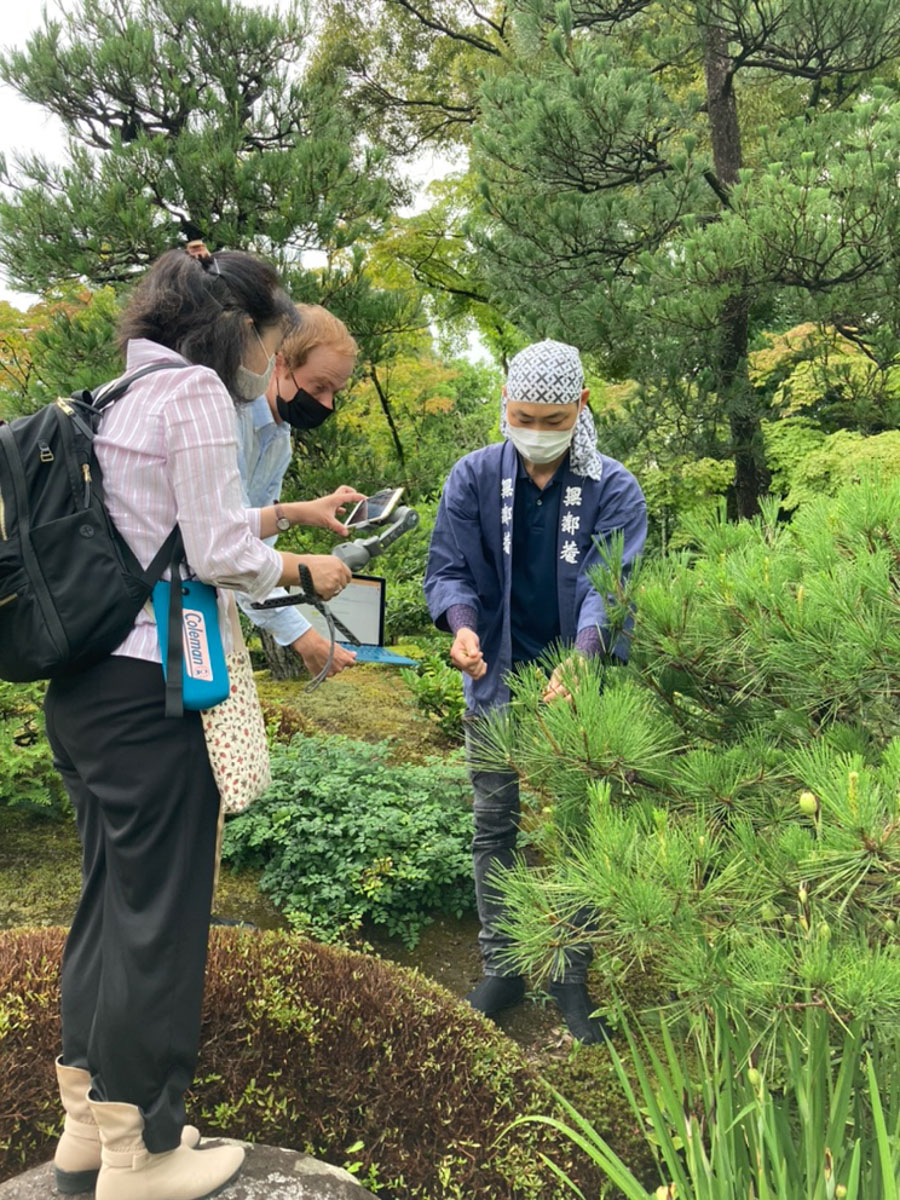
We used an advance questionnaire to confirm everyone’s familiarity with the technique of candle pruning and then gave a live demonstration of it.
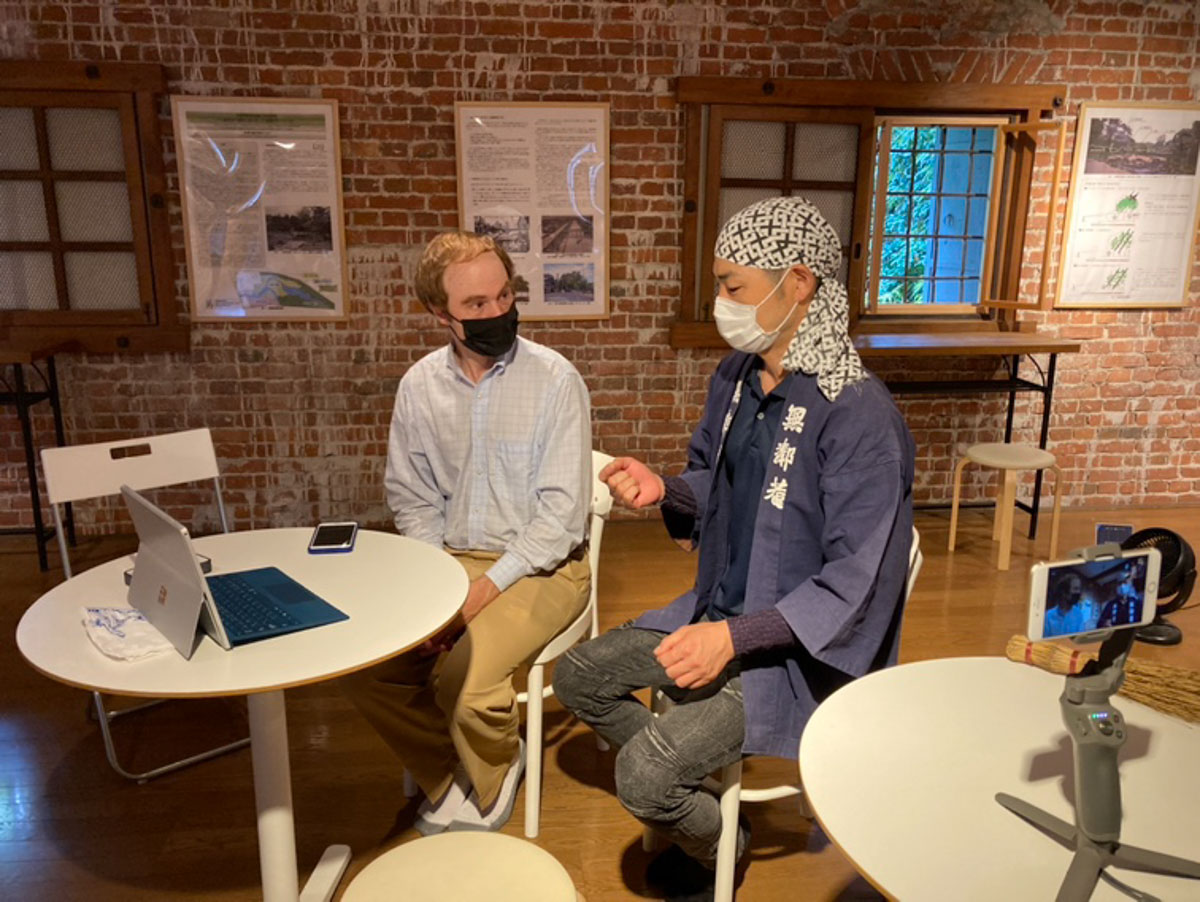
November 29
Deguchi performed pine needling for this session. As he answered questions from the other gardeners, he demonstrated how to prepare one’s tools and what to decide before starting work, as well as how frequently to step back from the tree to check its overall shape.
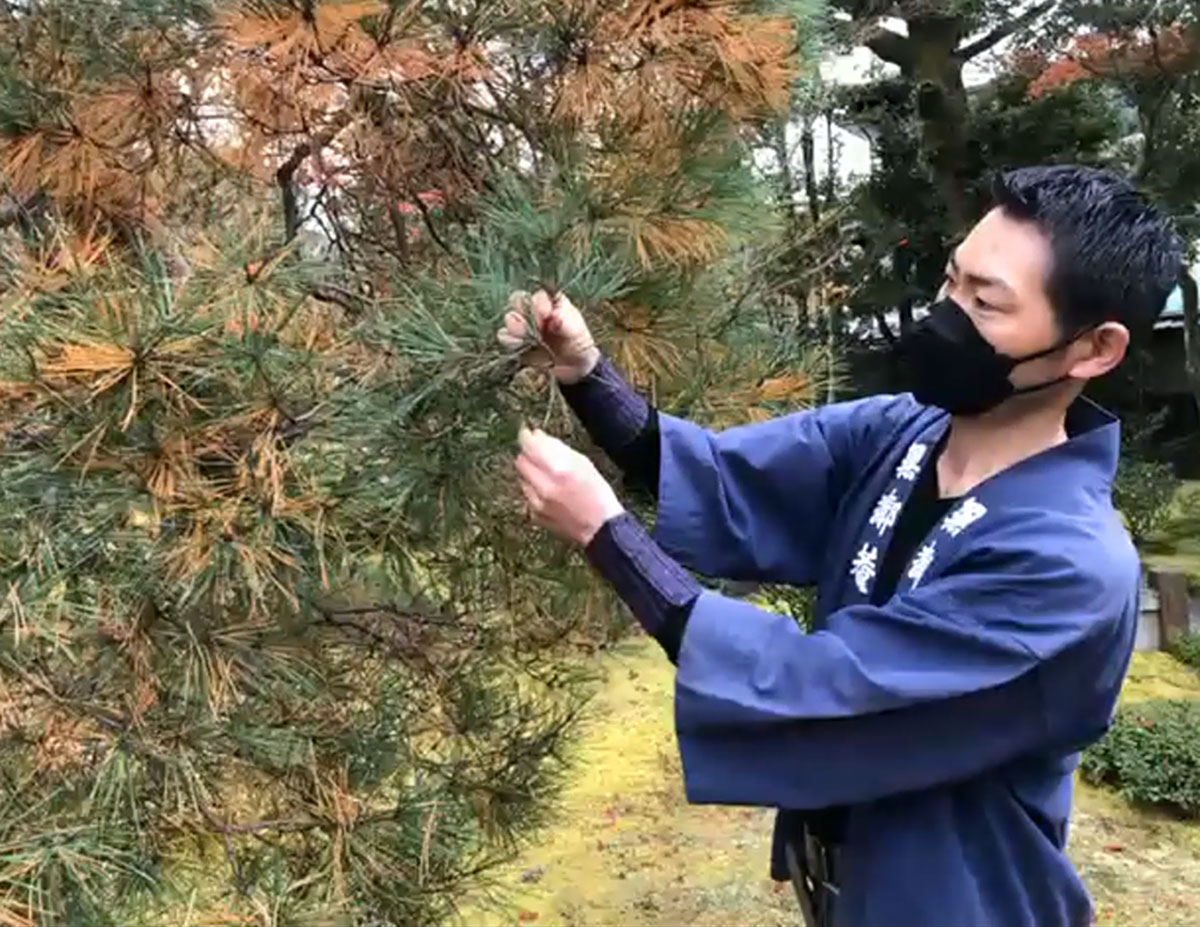
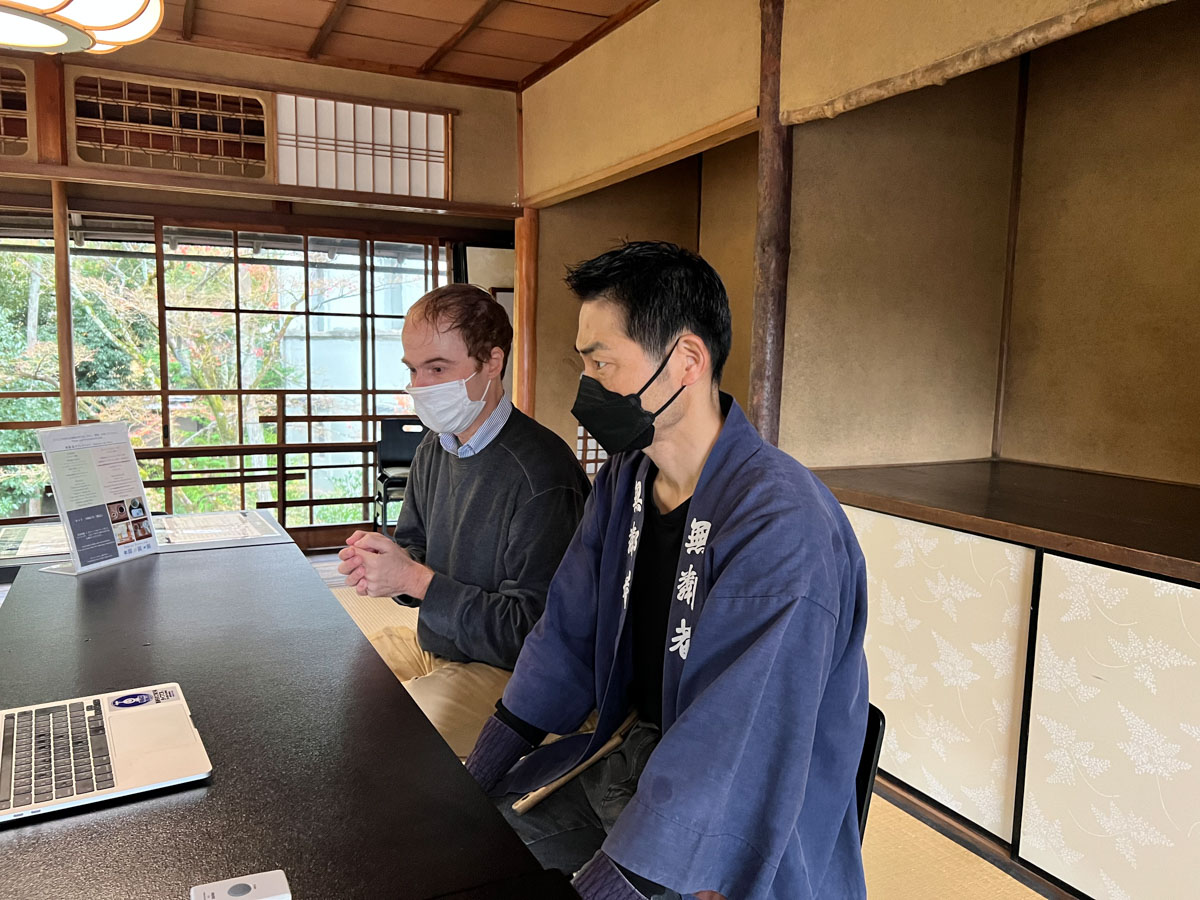
These were our first live online sessions, but in the end the exchange of questions and answers made it easy to convey the essential points of how to improve one’s skills.
The program has allowed us not only to help each other raise our skill level, but also to rethink what it means to foster gardens with people from different cultural backgrounds and environments.